Concept · Strategy
Mergers and acquisitions
Buy, combine, or sell control of a business when ownership can create more value than the transaction costs
The deal is the start of the work.
A merger or acquisition changes who controls a business. A buyer may seek technology, intellectual property, customers, talent, capacity, geographic access, or a new source of cash flow. A merger combines entities under negotiated terms; an acquisition transfers control, usually for cash, shares, or a mix. The legal form does not determine whether the strategic case is sound.
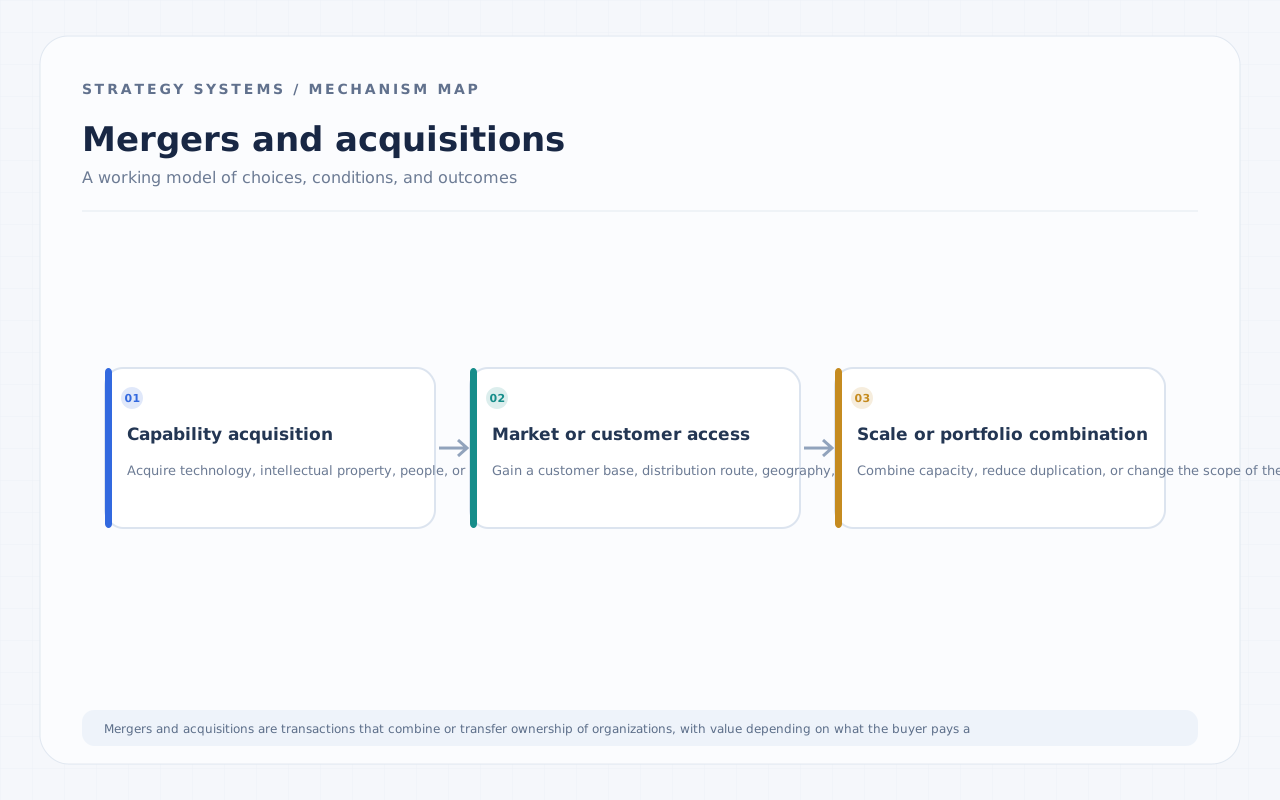
Mergers and acquisitions are transactions that combine or transfer ownership of organizations, with value depending on what the buyer pays and can realize after closing.
Use a consistent value perimeter. In an enterprise comparison, the target’s standalone operating value plus ownership-only benefits, less incremental integration and other costs, must exceed the enterprise price paid. In an equity comparison, reconcile cash, debt and financing effects to equity value. Alternatively compare synergy value with the premium over a stated standalone value; do not deduct both the full price and that premium. Include feasible build or contract alternatives, and avoid subtracting interest again from cash flows already discounted at a cost of capital.
Integration is a design choice. Some acquisitions need close process and systems integration; others depend on preserving the acquired team’s autonomy or culture. Leaders must decide which capabilities to combine, which to protect, who owns decisions, and how customers and employees experience the transition. The integration plan should begin during diligence and specify accountable owners and milestones.
Transaction purposes
Different deals seek different resources and need different integration choices.
 Capability acquisition
Acquire technology, intellectual property, people, or know-how faster than building it internally.
01
Acquire technology, intellectual property, people, or know-how faster than building it internally.
Acquire technology, intellectual property, people, or know-how faster than building it internally. Market or customer access
Gain a customer base, distribution route, geography, or product complement.
02
Gain a customer base, distribution route, geography, or product complement.
 Scale or portfolio combination
Combine capacity, reduce duplication, or change the scope of the company portfolio.
03
Combine capacity, reduce duplication, or change the scope of the company portfolio.
A continuum, not a switch
An acquisition changes control; realized value depends on the strategic benefit after price, execution, and integration costs are accounted for.
“A strategic rationale is a forecast to test, not a synergy already earned.”
Why it matters
Deals can accelerate a strategy, but the negotiated price can transfer expected benefit to the seller. A buyer should use an outside view, compare build/partner alternatives, test downside cases, and decide what it will do if the expected synergy does not materialize. A smooth closing is a legal milestone, not proof that integration or returns are successful.
Microsoft’s 2024 Form 10-K says it completed the Activision Blizzard acquisition in October 2023 for a total purchase price of $75.4 billion and included the results in its More Personal Computing segment. Microsoft also described the content shift from third-party to first-party. Those disclosures establish transaction facts and management’s framing, but not a realized return on the investment.
Microsoft’s Note 8 reports a net post-close impact on revenue and operating loss that includes changing some content from third-party to first-party. That is an accounting and consolidation boundary, not a standalone target return or clean acquisition effect. Goodwill attributed to expected integration benefits is an expectation at purchase, not realized synergy.
Real-world examples
The same concept shows up in different ways across industries.

When it breaks
A deal can fail through overpayment, weak diligence, customer overlap, talent departure, systems integration, culture conflict, or regulatory limits. The most compelling presentation may rely on a distant revenue synergy while leaving near-term cost, execution, and retention risks underdeveloped. Separate what is contractually secured from what must be earned after closing.
Integration can also damage the asset the buyer wanted. Combining processes may remove local knowledge or slow product decisions; preserving autonomy may prevent necessary coordination. Assign decision rights explicitly, define which capabilities must remain independent, and track customer retention, employee continuity, integration cost, and incremental contribution against the deal case.
Separate closing, integration and value realization. A purchased capability may remain intact while its expected distribution benefit fails, or an integration saving may arrive after customers and employees leave. Compare incremental cash against the no-deal alternative with the same scope; acquired revenue is not itself value created by the transaction.
Key takeaways
- 01
What can ownership create that a contract, partnership, or internal build cannot create at lower risk or cost?
- 02
How much value remains after the consistently defined price or premium, integration, regulatory and retention costs, with financing treated once?
- 03
Which capabilities should combine or stay independent, and who owns each post-close milestone?
Related concepts
See all → Capital allocationFund the best next use of capital.
 Build, buy or partnerChoose the boundary that best fits the capability and time horizon.
 DiversificationExpand the portfolio with a reason.
 Corporate restructuringTrace what moves, stays and must be rebuilt.
 Activity-system fitMake the parts work better together.
Sources
- Microsoft Annual Report 2024 · Microsoft Corporation. Note 8, Business Combinations, Activision Blizzard closing October 13 2023, purchase price allocation, expected goodwill benefits and net post-close revenue/operating-loss impact including content reclassification.