Framework · Strategy
Theory of change
Make the causal assumptions between an investment and its intended outcome explicit enough to test
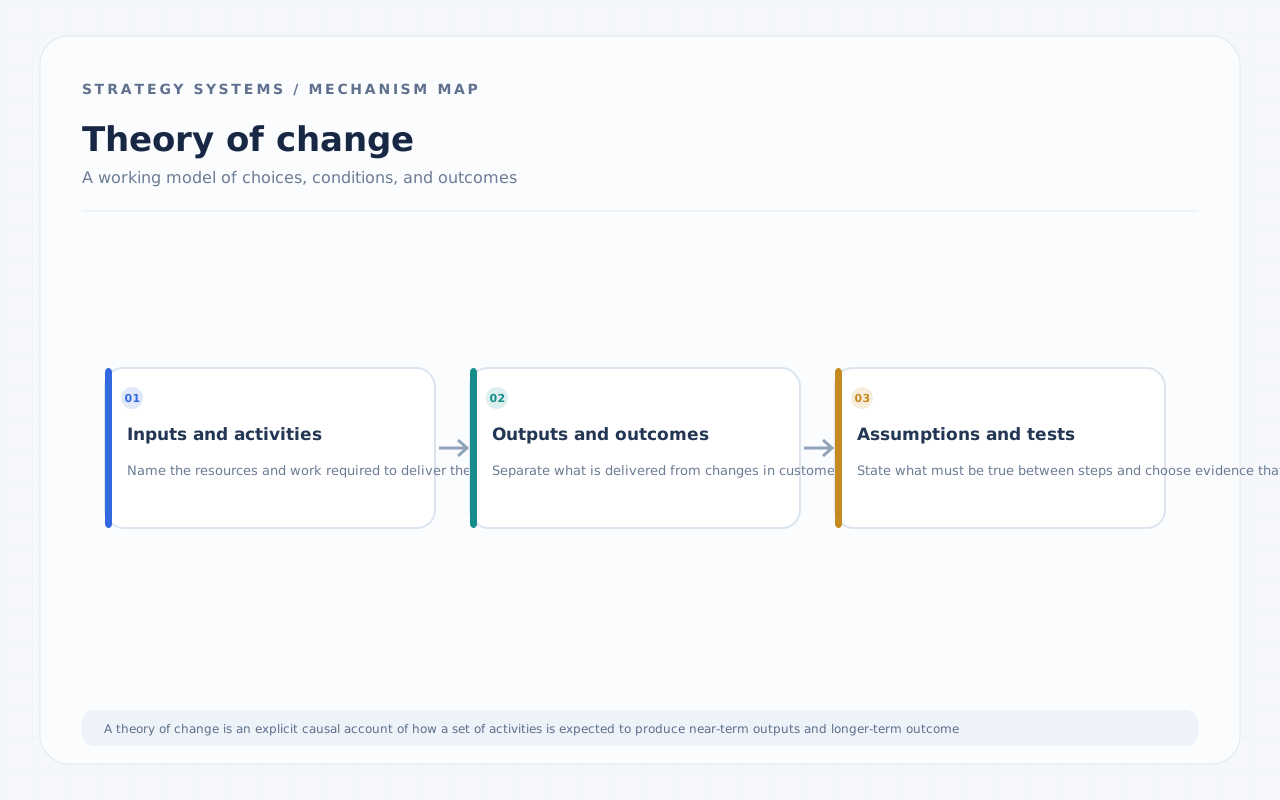
Show the path from action to outcome.
A theory of change starts with a desired outcome and works backward to identify intermediate changes, activities, resources, and assumptions that could make it happen. It shows the proposed causal path rather than merely listing tasks. For a business initiative, the map might connect customer research and onboarding improvements to faster time-to-value, higher activation, stronger retention, and contribution—but each link is an assumption until measured.
A theory of change is an explicit causal account of how a set of activities is expected to produce near-term outputs and longer-term outcomes under stated assumptions.
A useful map names who is expected to change, what condition must change, when it should happen, and what outside factors could affect it. Then choose indicators for implementation, short-term outcomes, and longer-term results. A logic model can be the visual summary; a narrative should explain why each link is plausible, what evidence supports it, and where the team is uncertain.
A theory of change is not a forecast or proof of causality. The U.S. Centers for Disease Control and Prevention describes a logic model as the program's roadmap for how activities are supposed to lead to outcomes, and distinguishes that intended path from evaluation of what happened. The model should change when context, inputs, or evidence changes. If causal impact matters, comparison groups or other credible evaluation methods may be needed.
Build a testable causal chain
Connect the action to measurable changes and make the assumptions inspectable.
 Inputs and activities
Name the resources and work required to deliver the intervention.
01
Name the resources and work required to deliver the intervention.
Name the resources and work required to deliver the intervention. Outputs and outcomes
Separate what is delivered from changes in customer behavior or business results.
02
Separate what is delivered from changes in customer behavior or business results.
 Assumptions and tests
State what must be true between steps and choose evidence that could disconfirm it.
03
State what must be true between steps and choose evidence that could disconfirm it.
A continuum, not a switch
A theory of change adds an explicit explanation and evidence plan to a list of work. More detail helps only when it clarifies a decision.
“A causal map states how the plan is supposed to work; evidence must show whether it did.”
Why it matters
A theory of change can expose leaps in strategy, such as assuming that more leads automatically create more customers. Teams can then test the uncertain link before scaling spending. It also improves communication by showing how day-to-day work relates to outcomes and where other departments or external conditions affect results. Keep the model short enough to revisit as evidence accumulates.
Google's 2022 announcement about winding down Stadia said the consumer service had not gained the expected traction, while describing applications for its underlying streaming technology elsewhere. This illustrates why outcomes and assumptions should be separated: a technically capable platform did not guarantee customer adoption. Google's announcement gives management's stated explanation, not a full causal evaluation of the service.
Separate delivery failure from mechanism failure. If the activity was not implemented with the required resources or quality, the hypothesized link has not been tested as designed. If it was delivered but behavior did not change, examine the adoption assumption and competing explanations. Record what evidence could distinguish those possibilities before scaling the intervention.
Real-world examples
The same concept shows up in different ways across industries.

When it breaks
A diagram can create false certainty if arrows are treated as proven cause-and-effect or if unfavorable evidence is omitted. External events, selection effects, and other initiatives may explain observed changes. Distinguish outputs, outcomes, and impact; describe comparison or counterfactual evidence where causal claims matter.
Too many layers can make a model impossible to measure, while vague outcomes such as 'create value' do not guide decisions. Keep each link concrete and time-bound, identify the owner of each measure, and revisit the assumptions at decision gates. Do not hold a team accountable for outcomes it cannot control without also tracking external conditions and available resources.
An outcome can improve while the proposed path is wrong. Selection, outside events or another intervention may explain the result. A roadmap is useful for specifying those alternatives and choosing observations, but it cannot replace a credible comparison when the claim is causal impact. Revise the narrative and map together when evidence changes.
Key takeaways
- 01
What customer or organizational outcome is the initiative intended to change, and for whom?
- 02
What specific chain connects activities to that result, and which link is least supported?
- 03
What evidence would show the path is working, and what evidence would cause the team to revise it?
Related concepts
See all → Leading and lagging indicatorsAct on the signal. Verify the result.
 Objectives and key resultsName the outcome. Measure the change.
 Strategic diagnosisFind the constraint that makes the situation hard.
 Decision treesMake uncertainty visible before choosing.
 Scenario planningPrepare for several plausible worlds, not one forecast.
Sources
- CDC Program Evaluation Framework, 2024 · U.S. Centers for Disease Control and Prevention. PDF indexes 12–14, printed pp. 11–13, Describe the program; logic model / program roadmap, intended if-then relations, narrative assumptions and living-document updates.
- A message about Stadia and our long term streaming strategy, September 29 2022 · Google. Consumer wind-down and lower-than-expected traction paragraphs; refunds, prospective uses of underlying technology and staff redeployment paragraphs.