
Company
Toyota
Learning embedded in ongoing process improvement
Appears in
Toyota describes continuing improvement within its production system. This shows an organizational method for acting on experience; the article does not assign Toyota a numerical experience-curve rate or infer cost savings from the description.

Toyota has described using standardized work and ongoing improvement in its production and development activities. A team could evaluate a leading signal such as process checks completed alongside lagging defect or rework outcomes. That measurement pairing is an application example, not a claim that Toyota uses these exact indicators or that checks alone cause quality gains.
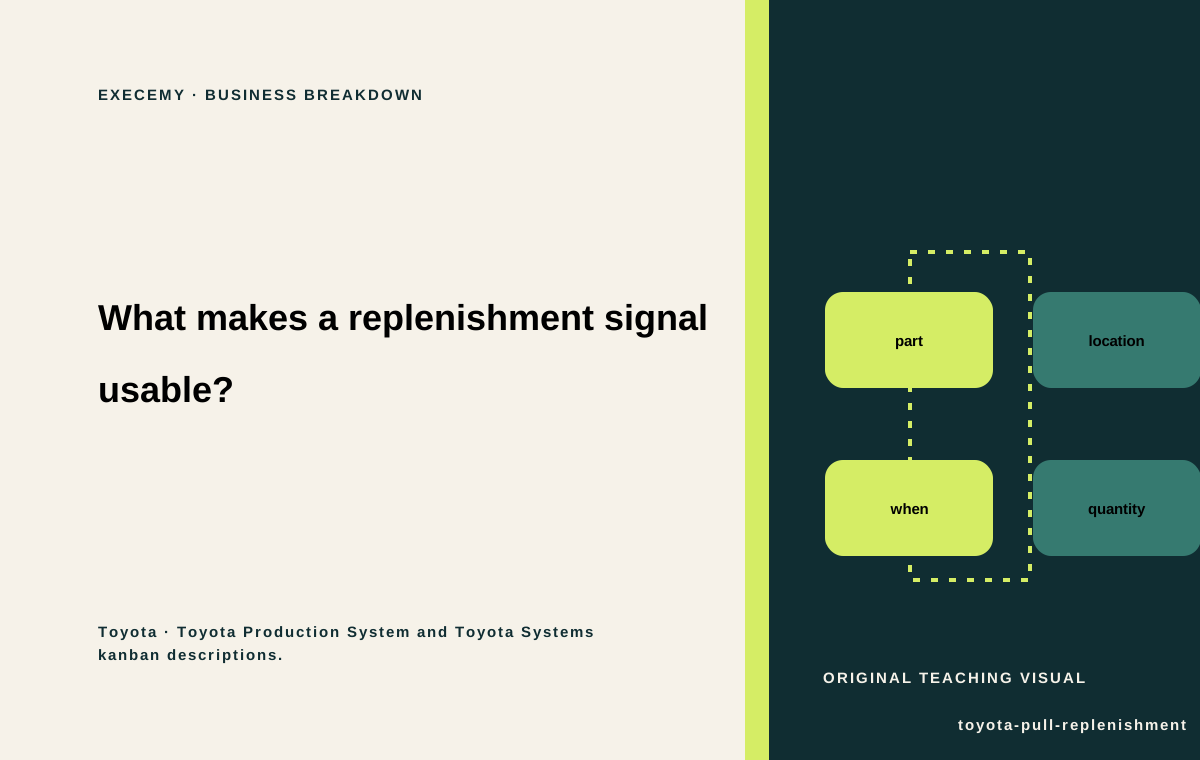
Toyota's production-system materials describe just-in-time as making and moving what is needed, when needed, in the required amount, and jidoka as stopping or signaling when a problem is detected. The principles connect flow with quality at the source; they are not a promise of zero inventory or immunity from disruption.
Toyota’s May 2018 financial-results remarks describe applying standardized work to development to understand time and cost per output. The account supplies the intended use; it does not provide a matched before/after lead-time estimate or identify the contribution of standardization separately from other cost efforts.

Toyota’s official Production System account describes synchronized flow and stopping when an abnormality occurs. This is a useful example of protecting system quality and flow; it does not imply every process should run without buffers or that all constraints are machines.
Cases
Related concepts
See all → Experience curvesTreat learning as a measured pattern, not a law of nature.
 Leading and lagging indicatorsAct on the signal. Verify the result.
 Lean operationsMake work flow. Surface problems early.
 StandardizationRepeat the method. Learn from the variation.
 Throughput and bottlenecksFind the constraint that governs end-to-end output.