Open visual reader →
What makes a replenishment signal usable?
Toyota’s history dates company-wide kanban rollout to 1963 and supplier expansion to 1965. It describes trials in individual processes, rather than an instantaneous uniform installation. The subsequent operating analysis distinguishes intended mechanism from observed improvement.
Explore Toyota →
The question
What makes a replenishment signal usable?
Toyota’s recorded expansion of kanban from machining to company processes and outside suppliers. · 1963 company rollout and 1965 supplier expansion; current method explanation. Toyota Systems says the kanban message identifies the part, location, time, and quantity. Clear fields reduce ambiguity, but a correct card cannot compensate for an unreliable supplier or a changed demand signal. Toyota’s history dates company-wide kanban rollout to 1963 and supplier expansion to 1965. It describes trials in individual processes, rather than an instantaneous uniform installation. The question is how the recorded design changes the work and which evidence would establish its benefit.
- Toyota Production System — Section ‘Just-in-Time’: making only what is needed, when needed, in the amount needed; synchronization; stated minimum buffer stocks on the assembly line and preceding process.
- Kanban System Special Feature — Kanban explanation: card identifies part, location, timing, quantity; suppliers replenish according to daily production requirements.
- Toyota 75-year history: production-system development — PDF index 0, Company-wide adoption of the Kanban system (1963); Adoption of the Kanban system for parts supplied from suppliers (1965).
Mechanism 1 · A dated design choice, with an unmeasured outcome
A dated design choice, with an unmeasured outcome.
The rollout crossed a coordination boundary. An internal instruction can be changed within Toyota; an outside supplier needs a shared item definition, retrieval instruction and workable delivery response. Retaining a separate delivery instruction was a real prior arrangement: the same history describes earlier red/blue supplier tags. The record does not disclose a financial comparison between those arrangements. Analyze the new system by asking whether each withdrawal can trigger the correct replacement before the receiving process needs it, including failures, transport and minimum stock.
Mechanism 1 · A dated design choice, with an unmeasured outcome
The card carries a small but exact specification.
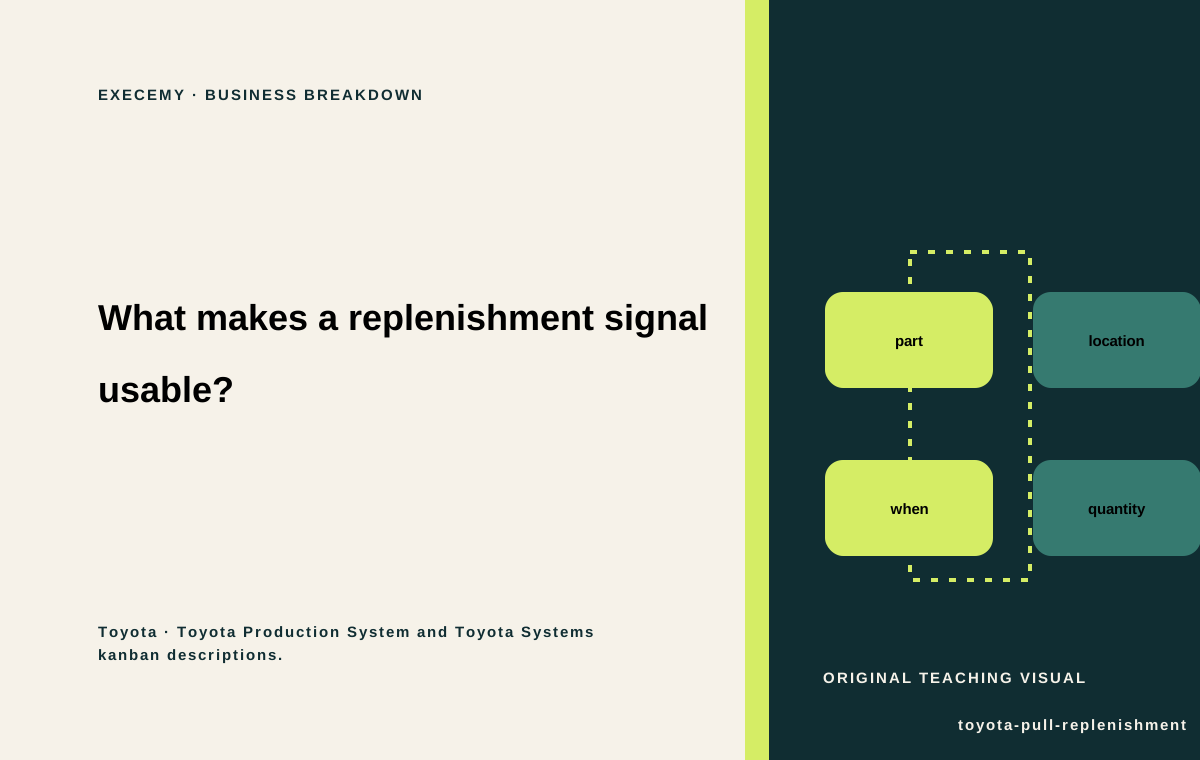
Toyota Systems says the kanban message identifies the part, location, time, and quantity. Clear fields reduce ambiguity, but a correct card cannot compensate for an unreliable supplier or a changed demand signal.
- Kanban System Special Feature — Kanban explanation: card identifies part, location, timing, quantity; suppliers replenish according to daily production requirements.
Mechanism 2 · Pull still uses a buffer
Pull still uses a buffer.
Toyota’s production-system description mentions minimum stocks between processes. The design question is not how to make inventory vanish; it is where a small buffer protects flow and where excess hides an underlying mismatch.
- Toyota Production System — Section ‘Just-in-Time’: making only what is needed, when needed, in the amount needed; synchronization; stated minimum buffer stocks on the assembly line and preceding process.
- Kanban System Special Feature — Kanban explanation: card identifies part, location, timing, quantity; suppliers replenish according to daily production requirements.
Mechanism 3 · The buffer protects against uncertainty in replenishme
The buffer protects against uncertainty in replenishment time.
A pull signal makes demand visible; standard part data and supplier timing keep it useful. Lower buffers leave less time to absorb a late delivery, so lead-time variation and recovery options should shape the buffer size. Toyota's pages describe the method, not its failure rate under disruption.
- Toyota Production System — Section ‘Just-in-Time’: making only what is needed, when needed, in the amount needed; synchronization; stated minimum buffer stocks on the assembly line and preceding process.
- Kanban System Special Feature — Kanban explanation: card identifies part, location, timing, quantity; suppliers replenish according to daily production requirements.
Optional application · unscored
Pick the buffer before you pull it
A repair operation replenishes a critical component after use, while supplier lead time varies.
Reveal: Define the part, location, timing and quantity signal. Observe demand and replenishment variation, criticality and service needs before choosing a buffer. A clear signal cannot make unavailable supply arrive.
Teaching assumption: Original fictional operating situation.
Teaching assumption: No numerical costs, durations, volumes, probabilities or observed company outcome are assigned.
The answer
What makes a replenishment signal usable?
Toyota Systems says the kanban message identifies the part, location, time, and quantity. Clear fields reduce ambiguity, but a correct card cannot compensate for an unreliable supplier or a changed demand signal. Pull production can make mismatches visible while reducing excess work in process, but a smaller buffer increases exposure to supplier delay or demand variation. Toyota's pages describe the operating method; they do not establish an optimal buffer size or disruption performance. Toyota describes minimum stocks and Toyota Systems describes the signal. Neither source estimates an optimal buffer or a disruption recovery probability. Keep demand, supplier lead time, qualification and recovery evidence as required inputs instead of inventing a delivery range. The dated intervention comes from a retrospective company history; modern method pages explain the mechanism but do not establish the original response protocol or causal performance. Contemporaneous option records and comparable outcome measurements remain unavailable. The case is bounded to Toyota’s recorded expansion of kanban from machining to company processes and outside suppliers. during 1963 company rollout and 1965 supplier expansion; current method explanation.
Sources and limitations
- Toyota Production System — Toyota Motor Corporation
Section ‘Just-in-Time’: making only what is needed, when needed, in the amount needed; synchronization; stated minimum buffer stocks on the assembly line and preceding process.
Exact factual uses and inference limits are bound in the evidence claim ledger.
The public explanation states a principle, not an inventory target, service-level result, or disruption recovery rate.
- Kanban System Special Feature — Toyota Systems Corporation
Kanban explanation: card identifies part, location, timing, quantity; suppliers replenish according to daily production requirements.
Exact factual uses and inference limits are bound in the evidence claim ledger.
A company product and method explanation; the stated scale is promotional and does not establish performance for every plant or supplier.
- Toyota 75-year history: production-system development — Toyota Motor Corporation
PDF index 0, Company-wide adoption of the Kanban system (1963); Adoption of the Kanban system for parts supplied from suppliers (1965).
Exact factual uses and inference limits are bound in the evidence claim ledger.
Retrospective company history, not a contemporaneous experiment. Adoption dates and equipment/configuration are reported; no measured causal improvement or internal option-ranking record is supplied. Current method explanations are not projected backward as historical operating protocols.
Original illustrative scenes are not documentary evidence.
New concepts and cases by email