Concept · Growth
Growth loops
A repeatable system where customer activity creates inputs that bring in more customers or expand use
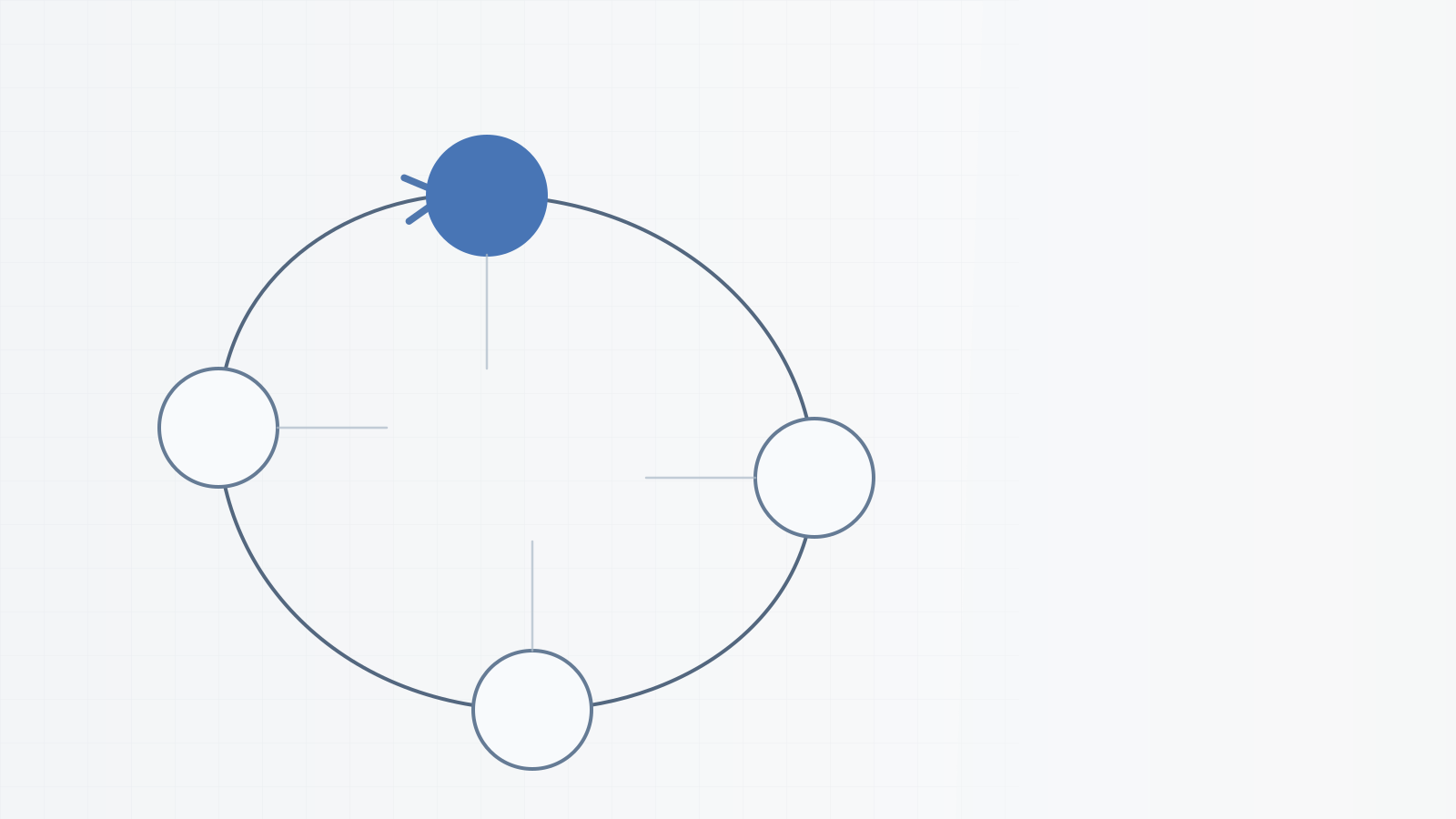
Make product use create the next opportunity.
A growth loop connects an output of use to a useful next input for acquisition, activation, continued use or commercial expansion. The connection must describe an observable mechanism. Drawing an arrow back to the beginning cannot demonstrate that the business grows through it.
A growth loop is a connected set of product and business activities in which an output feeds a future input for growth.
The decision is which step limits the useful cycle and whether improving it is worth the full cost. An invitation needs a relevant recipient; a contribution needs a use; repeated activity needs an outcome. A loop can break where any of those relationships fail.
Keep customer and commercial paths distinct. A useful output can circulate without creating payment, while payment can occur for a capability unrelated to the output. The investment needs evidence about the intended result, not an attractive loop diagram.
Common loop mechanisms
Name the output that feeds future value. Each model needs its own activation and cost measures.
 Referral
A customer invites another person who can receive useful value and may become an active customer in turn.
01
A customer invites another person who can receive useful value and may become an active customer in turn.
A customer invites another person who can receive useful value and may become an active customer in turn. Collaboration or network
More useful participants, contributions, or connections make the product more valuable to the next participant.
02
More useful participants, contributions, or connections make the product more valuable to the next participant.
User-created contentUse generates work or information that helps other people discover the product and start their own use cycle.
03
Use generates work or information that helps other people discover the product and start their own use cycle.
A continuum, not a switch
A loop is more complete when an output from use creates useful value for another participant, who activates and creates the next output at sustainable economics.
“The loop matters only when the output becomes a useful next input.”
Why it matters
Dropbox describes shared work and acquisition along with separate paid-conversion methods. Duolingo defines recurrence through completed lessons. These records document possible steps, but neither supplies a complete causal return for an automatically reinforcing loop.
Trace origin, recipient or returning participant, meaningful task and next output. Record timing, duplicate exposure and failure points. The next useful input may depend on quality or support rather than the quantity of outputs produced.
Outside marketing, brand demand or changing participant composition can explain growth alongside the loop. A design change that increases an intermediate event can still reduce downstream quality. The customer outcome must be able to overturn the apparent activity gain.
Real-world examples
The same concept shows up in different ways across industries.

Dropbox’s disclosed design connects sharing and referrals to acquisition, while prompts, trials and lifecycle marketing support later paid conversion. The company has chosen several related activities, but the filing does not observe them as a single causal loop. A person who receives a file may create an account; an account may later encounter a paid offer. Neither event proves that the person supplies another useful input to the same process. The decision is which output actually enables repetition. If the output is another active collaborator, identify the task that makes their next invitation useful. If it is revenue, identify how the revenue funds the next acquisition activity and whether the contribution exceeds its costs. These are analytical mechanisms, not measured Dropbox cycles. A reward can create an initial event without durable repetition, and product need can explain adoption without the proposed loop. Follow each handoff and the conditions for its return to input. A circular diagram should expose the missing step rather than supply evidence that the cycle exists.
Duolingo’s filing defines lesson streaks and reports activity. A return can provide an opportunity to learn, yet the snapshots do not establish learning progress or the feature’s effect. The outcome must remain distinct from recurrence.
When it breaks
In a hypothetical community, more posts attract visits while crowding out useful answers. The quantity loop becomes stronger as the customer experience weakens. Quality and moderation can be limiting inputs even when content production rises.
A subsidy can temporarily supply the next input while obscuring its cost. Investigate what sustains useful participation when the support changes. Do not assume every positive activity relationship compounds indefinitely.
Key takeaways
- 01
Draw the specific mechanism from product output to the next useful input.
- 02
Measure conversion, activation, retention, delay, and cost at each loop step.
- 03
Look for quality, trust, saturation, and service costs that can weaken the cycle.
Related concepts
See all → Network effectsRelevant participation can change another participant’s value.
 ViralityWhen users bring users.
 RetentionMeasure who stays, when, and why.
 Go-to-market strategyDesign the path from customer to value.
 Cold-start problemIdentify the activity an initial network is missing.
Related cases
See all →Sources
- Dropbox registration statement on Form S-1 · Dropbox / SEC. Our Business Model: signup, acquisition and paid conversion paragraphs; paying-user definition printed p. 13; registration/conversion risk p. 15; referral and enterprise selling risk; Sales and Marketing
- Duolingo 2024 Form 10-K · Duolingo / SEC. Business, The Duolingo Learning Experience, It’s Fun: streak definition and December 31 counts; MD&A Operating Metrics, Daily Active Users: Q4 DAU/MAU comparisons