Concept · Innovation
Disruptive innovation
Look for a market path that begins with overlooked customers or non-consumption and improves from there
A market path, not a synonym for breakthrough.
Disruptive innovation describes a path that begins with a simpler or more accessible offer for overserved customers or people not previously served, and later develops toward more demanding use. It concerns customers, the business model and movement over time. A successful new technology is not automatically disruptive.
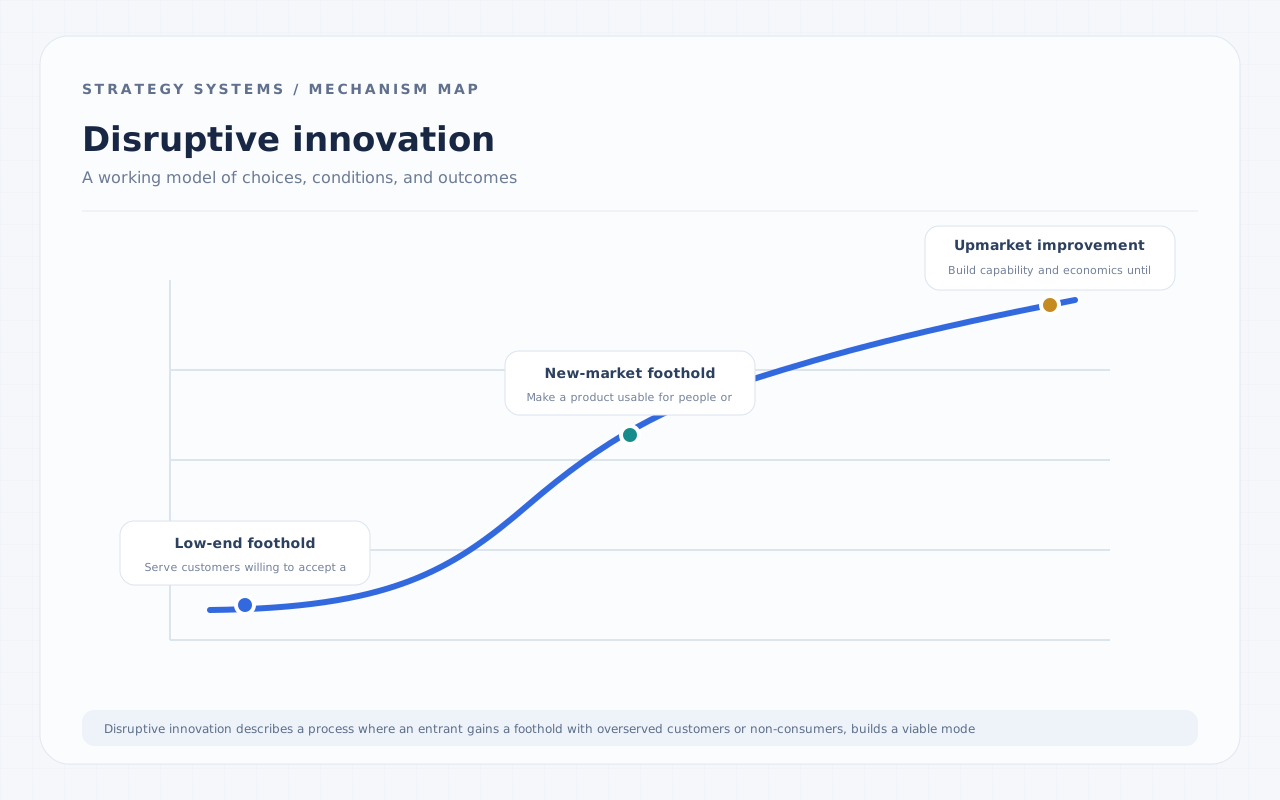
Disruptive innovation describes a process where an entrant gains a foothold with overserved customers or non-consumers, builds a viable model, and improves until established competitors must respond.
The decision is whether the proposed foothold has useful demand and economics that can support improvement. Identify what customers accept less of, what becomes more accessible and what they would otherwise use. A mainstream premium entrant can be innovative without fitting this path.
The classification requires a sequence, not hindsight from an incumbent’s eventual failure. Evidence should show the initial customer circumstances, improving capability and subsequent reach. The incumbent’s actual response also matters.
Two common starting points
Look at who is excluded or poorly served before looking at the technology label.
 Low-end foothold
Serve customers willing to accept a simpler offer rather than pay for unused performance.
01
Serve customers willing to accept a simpler offer rather than pay for unused performance.
Serve customers willing to accept a simpler offer rather than pay for unused performance. New-market foothold
Make a product usable for people or situations that previously relied on no purchase or a workaround.
02
Make a product usable for people or situations that previously relied on no purchase or a workaround.
 Upmarket improvement
Build capability and economics until the offer can serve more demanding use cases.
03
Build capability and economics until the offer can serve more demanding use cases.
A continuum, not a switch
Disruption is a pattern across customers and time. A product can be innovative and successful without following this path.
“A technology is not disruptive by itself; track the customers, business model, and path of improvement.”
Why it matters
The Christensen Institute distinguishes accessible footholds from improvements to established offers. This is credited theory context, not independent classification of the company examples. The filings below document architecture and response while leaving the full disruption path unproved.
The mechanism concerns a model that can serve an initially overlooked task and fund greater capability. Lower price without viable delivery is insufficient. A new market can demand education or supporting services that delay adoption even when the technology works.
Execution, financing, distribution and changing preferences can explain competition alongside disruption. A low-end label should not conceal those alternatives or imply an incumbent is unable to respond. Identify the evidence that would change the classification.
Real-world examples
The same concept shows up in different ways across industries.

Netflix’s filing describes subscription DVD delivery and instant watching. It documents an actual offer and workflow, not the initial customers’ overservice or nonconsumption. These facts alone cannot certify a disruption classification.
Blockbuster’s filing describes online subscriptions, no-late-fee initiatives and Total Access linking online rentals with store exchanges. Netflix’s filing describes DVD subscriptions and instant watching. These are actual offer and workflow changes. The incumbent also disclosed investment and profitability risks, which provides meaningful counterevidence to a story in which it simply could not respond. A disruption classification requires a customer path, not just a different technology or a later market outcome. The cited filings do not establish the initial customers’ nonconsumption or overservice, nor trace a verified movement from that foothold into the incumbent’s core market. A costly incumbent response can concern existing customers and operating economics without proving a disruptive entry path. For a manager, ask which customer was previously unable or unwilling to use the established offer and how the entrant became viable for that customer. If that evidence is missing, describe the observed model change and response directly. The sources support those decisions while leaving the disruption classification unresolved.
When it breaks
A hypothetical entrant serves established premium customers with higher performance. It can be valuable and successful while lacking a low-end or new-market foothold. Use sustaining or another description where the customer path fits it better.
A foothold can remain small because improvement is expensive or the next customers need different capabilities. Accessibility at entry does not guarantee movement upmarket. Investigate the economics and operating work required for that next stage.
Key takeaways
- 01
Which overserved customers or non-consumers form the foothold, and what do they use instead today?
- 02
What performance trade-off makes the early offer accessible, and how will the model earn enough to improve?
- 03
What evidence would show an actual move toward mainstream customers or a meaningful incumbent response?
Related concepts
See all → Sustaining innovationMake the current offer better for its market.
 Counter-positioningA better model with a costly response.
 Market developmentTake a proven offer to a new market.
 Product-market fitLook for sustained demand, not applause.
 Business model innovationChange the logic of the business, not only the offer.
Sources
- Disruptive Innovation Theory · Christensen Institute. Definition; Disruptive vs. Sustaining Innovations
- Netflix 2007 Form 10-K · Netflix / SEC. Business overview, printed p. 1; Growth Strategy p. 3; fulfillment and instant-watching discussion
- Blockbuster 2006 Form 10-K · Blockbuster / SEC. Customer proposition initiatives printed p. 12; initiative investment/profitability risk pp. 28–29; Total Access introduction p. 41