Concept · Strategy
Counter-positioning
A new model can be attractive precisely because an incumbent has more to lose by copying it
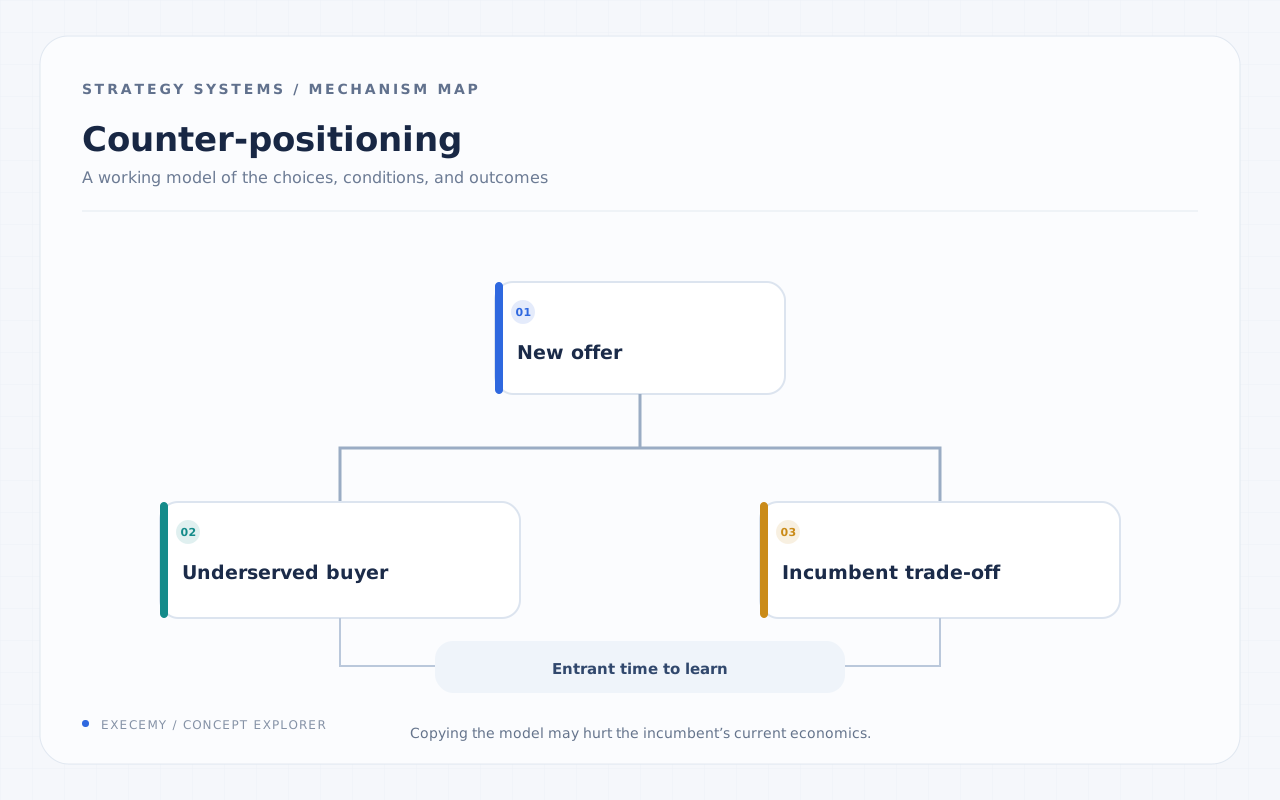
A better model with a costly response.
Counter-positioning describes a proposed advantage when an entrant’s useful business model creates a conflict for an incumbent that would copy it. The conflict can concern revenue, assets, partners or incentives. The incumbent must have something consequential to put at risk, and the entrant must still deliver useful value.
Counter-positioning is an entrant’s strategic advantage when an incumbent’s existing commitments make a direct response costly enough to delay or weaken it.
The decision is whether the conflict creates enough time for the entrant to become viable. A different feature is not enough. Examine what a comparable response would change in the incumbent’s model and what alternative response remains possible.
A response can be delayed, partial, separately organized or accepted despite cannibalization. Distinguish those possibilities from inability. The label should prompt evidence about the conflict, not supply an explanation after the entrant succeeds.
Where the response can hurt
Find the incumbent commitment the new model would make harder to preserve.
 Revenue conflict
A new price or contract could replace high-margin transactions with lower, more predictable payments.
01
A new price or contract could replace high-margin transactions with lower, more predictable payments.
A new price or contract could replace high-margin transactions with lower, more predictable payments. Operating conflict
The new model needs different assets, skills, service levels, or decision rights than the incumbent has built.
02
The new model needs different assets, skills, service levels, or decision rights than the incumbent has built.
 Channel conflict
Selling direct or changing terms could strain distributors, franchisees, or partners the incumbent still needs.
03
Selling direct or changing terms could strain distributors, franchisees, or partners the incumbent still needs.
A continuum, not a switch
Counter-positioning is stronger when the entrant's model attracts customers and a comparable response would undermine valuable incumbent commitments. The advantage still depends on execution and time.
“The test is not whether the incumbent can copy the feature, but what it must put at risk to copy the model.”
Why it matters
Helmer’s author site provides the origin of the framework. The Netflix and Blockbuster filings separately document business architectures and actual responses. They cannot establish unobserved executive motives merely because the offers differed.
The mechanism is a trade-off in the incumbent’s feasible response. A new contract can alter revenue timing, while a new delivery method can require different assets. The entrant gains little from that conflict if its own service fails or cannot fund delivery.
The strongest competing account is ordinary competition through execution, price or access. A capable incumbent can respond even at a near-term cost. Evidence of an actual response should change the claimed duration or strength of the advantage.
Real-world examples
The same concept shows up in different ways across industries.

Netflix’s filing describes DVD subscriptions with no due dates or late fees and a fulfillment network. Those terms identify a different exchange and workflow. The filing alone does not prove a low-end disruption or a counter-positioning advantage.
Blockbuster’s 2006 filing describes no-late-fee initiatives and Total Access, which connected online subscriptions with store exchanges. Netflix’s DVD subscription terms and fulfillment model offered a different way to obtain movies. The incumbent’s response was therefore an actual operating choice, not merely a theoretical inability to imitate. Blockbuster also disclosed investment and profitability risks associated with its initiatives. That combination narrows a counter-positioning claim. A rival can respond while confronting a conflict with existing activities and economics. The relevant question is whether the response requires sacrificing value in the incumbent model, whether another response is feasible and whether the entrant can sustain its own offer. The filings establish terms, initiatives and risks; they do not reveal every executive motive or isolate the causes of eventual outcomes. A failed or costly response is different from no response. Use the documented move as counterevidence to an inevitable-paralysis story, then investigate the trade-off rather than infer it solely from the winner’s later position.
When it breaks
A hypothetical incumbent accepts cannibalization and uses a distinct team to implement the new offer. The entrant’s expected window narrows. A conflict exists without making the response impossible.
A financially attractive incumbent model can distract attention from the entrant’s own economics. Test useful demand and contribution as well as the rival’s conflict. Neither difference nor discomfort guarantees durable protection.
Key takeaways
- 01
Which customer group does the new model serve differently, and what behavior shows that the difference matters?
- 02
What revenue, asset, channel, or incentive would an incumbent have to put at risk to copy it? Find evidence of that conflict.
- 03
How much time does the gap create, and can the entrant reach positive contribution before the incumbent responds?
Related concepts
See all → Disruptive innovationA market path, not a synonym for breakthrough.
 Sustaining innovationMake the current offer better for its market.
 Business model innovationChange the logic of the business, not only the offer.
 Strategic trade-offsMake the choices competitors cannot copy one by one.
 MoatsDefensible advantages that last.
Sources
- 7 Powers · Hamilton Helmer. Author’s framework site; counter-positioning origin
- Netflix 2007 Form 10-K · Netflix / SEC. Business overview, printed p. 1; Growth Strategy p. 3; fulfillment and instant-watching discussion
- Blockbuster 2006 Form 10-K · Blockbuster / SEC. Customer proposition initiatives printed p. 12; initiative investment/profitability risk pp. 28–29; Total Access introduction p. 41