Concept · Strategy
Customer segmentation
Grouping buyers by differences that change what the business should offer, charge, or do
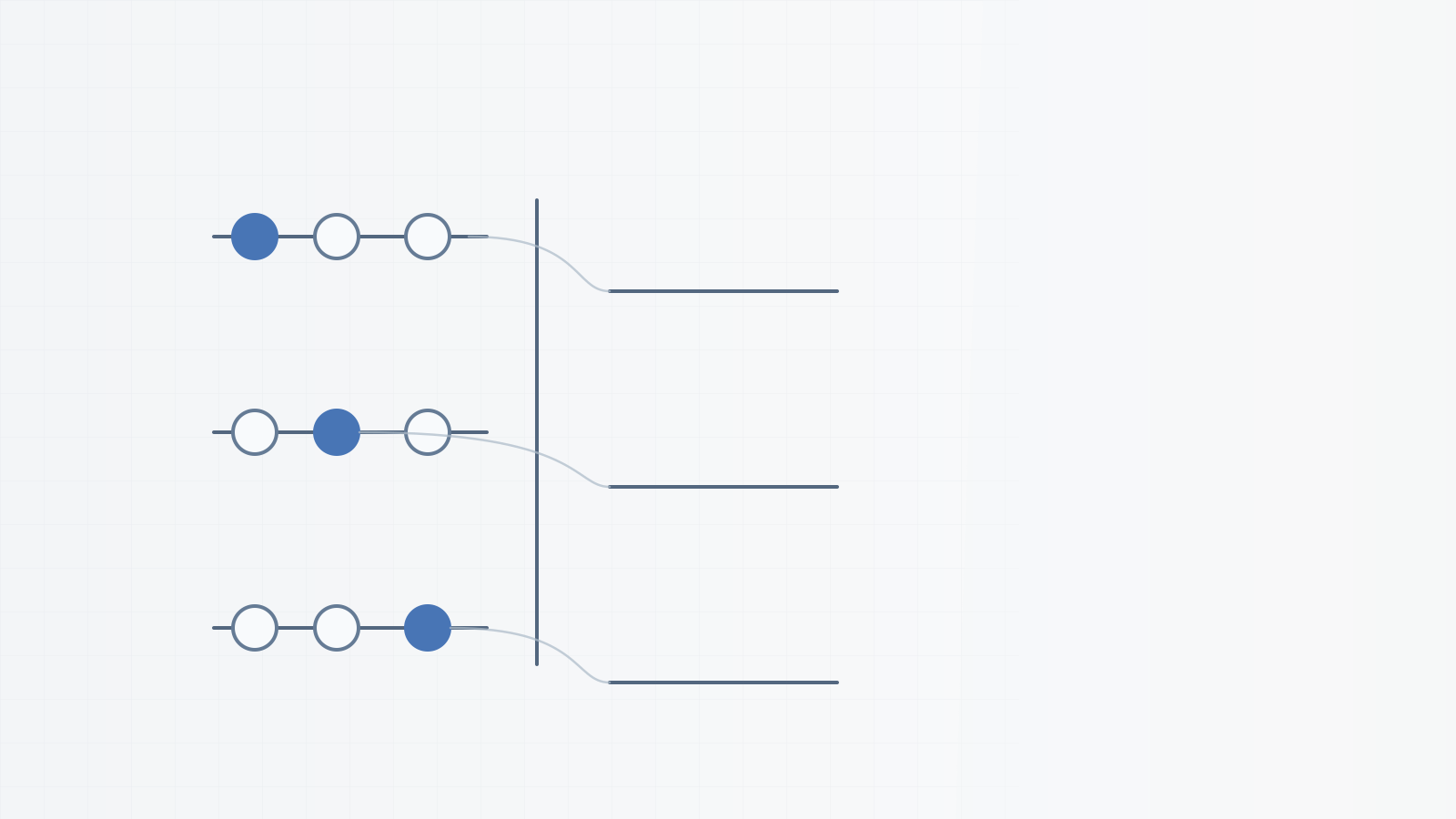
Group customers where the response changes.
A segment is useful when its members share something that changes their response to a product, price, channel, message, or service. Age, industry, location, company size, and purchase history can help describe a group. None is automatically a reason to serve it differently. The strategic question is whether the difference predicts a need or behavior the business can act on.
Customer segmentation divides a market into groups that respond differently enough to warrant a distinct business decision.
Good segmentation combines customer understanding with economics. A group may have a real unmet need yet be too costly to reach or serve. Another may be large but already well served. Teams need to estimate the group’s size, urgency, willingness to choose, expected contribution, and accessibility, then decide which segments deserve different offers and which should share one.
Segmentation is not the same as targeting or positioning. Segmentation describes meaningful differences in a market. Targeting chooses which groups to pursue. Positioning states what distinctive value the chosen buyers should associate with the offer. The decisions connect, but treating them as synonyms hides the choices and evidence each requires.
Ways to form segments
Start with the decision you need to make, then choose a basis that helps explain a different customer response.
 Needs or jobs
Group buyers seeking similar progress, even when their age, role, or industry differs.
01
Group buyers seeking similar progress, even when their age, role, or industry differs.
Group buyers seeking similar progress, even when their age, role, or industry differs. Behavior or value
Group by usage, purchase occasion, renewal, response to offers, or the economics of serving the account.
02
Group by usage, purchase occasion, renewal, response to offers, or the economics of serving the account.
Context or organizationUse geography, regulation, company size, buying role, or operating environment when it changes the offer or route to market.
03
Use geography, regulation, company size, buying role, or operating environment when it changes the offer or route to market.
A continuum, not a switch
Segmentation becomes more actionable as each group represents a demonstrable difference that supports a different offer, channel, price, or service choice.
“A useful segment changes an action, not just a label.”
Why it matters
Segments direct scarce effort. A small company cannot build a separate product, price, campaign, and support model for every difference it can measure. A focused segmentation helps teams decide where to tailor the offer, when to use a standard product, and which customers to decline.
A useful segment connects a difference to an action: a changed service, route or offer. Test whether the group’s response remains different under the relevant buying conditions, and whether the difference is large enough to justify the operating work. A demographic portrait alone does not answer those questions.
IKEA’s return-to-Japan account describes observing homes and altering service and instructions. The actionable difference concerns whether a buyer can transport, fit and assemble the product. This is more specific than treating nationality as a preference. The retrospective supplies choices and difficulties, not a statistical segmentation study.
Real-world examples
The same concept shows up in different ways across industries.

When it breaks
A segment is not useful when it cannot be reached, identified, or served differently. A finely divided list of groups can create operational complexity without improving customer outcomes. Consolidate groups when they respond similarly and keep separate groups only when the distinction changes a meaningful decision.
Demographic averages can hide variation within a group, and customer data can encode bias or collect more personal information than a decision needs. Validate a segment with observed behavior, check whether it predicts the result that matters, and consider privacy and fairness before activating it. Avoid assuming that a person behaves like the average of a category.
In a hypothetical furniture market, buyers of different ages can share a transport constraint, while neighbors of the same age have different capabilities. Grouping by the task can therefore suggest a different service decision than grouping by a demographic label. Validate the distinction with actual outcomes; the illustration supplies no observed response rate.
Key takeaways
- 01
Define the decision before selecting segmentation variables.
- 02
Keep segments distinct where response, need, access, or unit economics actually changes.
- 03
Validate group size, reachability, value, and ethical data use before creating separate experiences.
Related concepts
See all → Jobs to be doneUnderstand the situation behind the choice.
 Value propositionChoose a customer, meet a need, earn the price.
 PositioningChoose whom to serve—and what to leave out.
 Price discriminationMatch the offer to willingness to pay.
 Product-market fitLook for sustained demand, not applause.
Related cases
See all →Sources
- Costco 2025 Form 10-K · Costco / SEC. Membership, printed pp. 5–6; MD&A Membership Fees, pp. 26–27
- Story of the second try to make it in Japan · IKEA Museum. Enlightening visits; Home delivery and many returns; Lessons learnt; A customised range