Concept · Growth
Franchising
Expand through independent operators when a repeatable system and aligned incentives can travel together
Scale a system through local ownership.
In a franchise, the franchisor grants an operator defined rights to use a brand, format, or system. The franchisee commonly invests capital, hires staff, and runs a location; the franchisor may provide training, marketing, supply access, technology, and standards. Fees can include an initial payment and ongoing royalties or contributions. The contract determines the actual allocation of control, costs, territories, and risk.
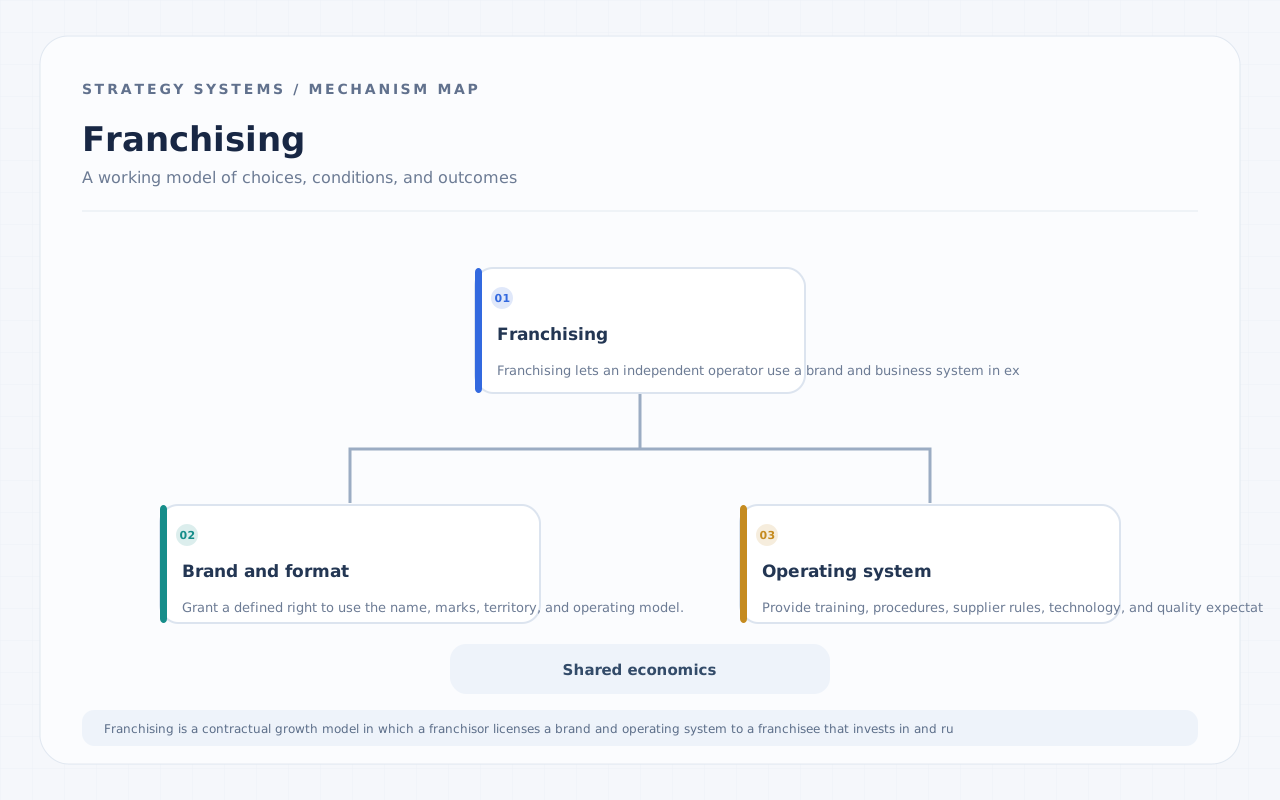
Franchising is a contractual growth model in which a franchisor licenses a brand and operating system to a franchisee that invests in and runs a local business under defined terms.
The model can grow a footprint without the brand owner financing every site. A local operator may bring capital, local knowledge, and direct accountability. In exchange, the brand owner gives up some direct control over daily execution and must support, monitor, and govern a network of businesses. Unit economics have to work for both sides after rent, labor, royalties, required investments, and local demand are considered.
Franchising differs from a company-owned branch and from a simple license. The legal definition depends on the contract and jurisdiction; in the United States, the FTC Franchise Rule requires a disclosure document with specified information for covered franchise offers. A strong system defines the essential customer promise and operating requirements, while the agreement clarifies where a local owner has discretion.
What the relationship can include
A franchise combines rights, obligations, economics, and operating support.
 Brand and format
Grant a defined right to use the name, marks, territory, and operating model.
01
Grant a defined right to use the name, marks, territory, and operating model.
Grant a defined right to use the name, marks, territory, and operating model. Operating system
Provide training, procedures, supplier rules, technology, and quality expectations.
02
Provide training, procedures, supplier rules, technology, and quality expectations.
 Shared economics
Set initial and ongoing fees, investment duties, purchasing terms, and renewal conditions.
03
Set initial and ongoing fees, investment duties, purchasing terms, and renewal conditions.
A continuum, not a switch
Franchising shifts more site investment and daily operation to local businesses while the brand owner retains contractual standards, support, and network responsibilities.
“A franchise scales the operating agreement as much as the brand.”
Why it matters
Franchising can align local effort with local ownership while allowing the central company to coordinate the brand and shared system. But a location count alone says little about the health of the network. Evaluate franchisee-level sales and cash flow, closures, renewal rates, support cost, brand consistency, and the balance of company-owned and franchised units. Expansion can destroy value for both parties if the format is not repeatable or the operator's returns are too thin.
McDonald's 2024 Form 10-K describes conventional franchising, developmental licensing, and affiliate structures across its markets, and notes that arrangements vary by legal and market conditions. Its scale illustrates that a restaurant brand can work with multiple ownership forms; the filing does not imply that each partner earns the same return or that its structure fits every business.
McDonald’s conventional model separates parent property and brand responsibilities from the operator’s local staffing, pricing and operating work; other arrangements allocate capital differently. Parent revenue and restaurant margin therefore do not estimate the franchisee’s return. Trace rent, royalties, required equipment and local costs on the party that actually bears them.
Real-world examples
The same concept shows up in different ways across industries.

When it breaks
The model fails when the customer experience depends on capabilities the franchisor cannot teach or monitor, or when franchisees lack enough margin to maintain quality. Unclear territory rights, one-sided cost changes, weak supply, and poor dispute resolution can damage trust. Brand standards should protect the promise without imposing irrelevant central control.
A franchise sale is not automatically a good unit or a sustainable network. Before recruiting operators, run company-owned or closely supervised pilots, document operating inputs and realistic cash requirements, and interview existing franchisees. Model the economics from the operator's perspective and define ongoing support capacity. Prospective operators should read the disclosure documents and contract, speak with current and former franchisees, and obtain qualified legal and financial advice for their jurisdiction.
More locations can increase parent fees while stretching support or weakening an operator’s economics. Check whether the independent owner can sustain the customer promise after all required commitments, then inspect central support and standards. A royalty on sales is not automatically aligned with the operator’s contribution after labor, food and property costs.
Key takeaways
- 01
Can an independent operator deliver the core promise and earn an adequate return after all required costs and fees?
- 02
Which decisions must remain common to protect quality, and which can be made by the local operator?
- 03
What evidence from operating units, renewals, closures, and franchisee interviews supports expansion?
Related concepts
See all → StandardizationRepeat the method. Learn from the variation.
 International expansionCross borders with a local operating plan.
 BrandPerception that compounds.
Related cases
See all →Sources
- McDonald’s Corporation 2024 Form 10-K · McDonald’s Corporation / SEC. Printed pp. 2–4, conventional franchise, developmental license and affiliate roles; independent operator staffing, pricing and brand standards. Restaurant Margins, parent cost perimeter.
- Franchise Rule · Federal Trade Commission. Rule Summary, disclosure document and material information for prospective purchasers; links to rule text and compliance guide.