Concept · Strategy
International expansion
Enter new countries with a market, operating model, and risk plan that can work locally
Cross borders with a local operating plan.
International expansion takes a product or business into a foreign market through exports, licensing, franchising, a joint venture, acquisition, or owned operations. Each route balances speed, control, capital, local knowledge, and risk differently. An export model may require less fixed investment but provide less control over customer experience; an owned subsidiary brings control but requires more capital and local operating capacity.
International expansion enters or grows a business in markets outside its home country, where the company must adapt its route to customers and manage distinct operating risks.
A market-entry thesis should define the target buyer, unmet need, alternatives, reachable demand, and expected contribution. It also needs an operating plan for local regulation, tax, employment, privacy, currency, logistics, payment, customer support, and political risk. Country-level averages can mask meaningful differences among regions, income groups, languages, and channels.
Expansion and localization are related but distinct. International expansion establishes a presence or pursues demand across borders. Localization adapts the offer, interface, price, or operating system to local conditions. A company can expand with a standardized product, localize before entering, or do both in stages. Learning from an initial segment can reduce uncertainty, but a pilot does not guarantee scale.
Routes into a foreign market
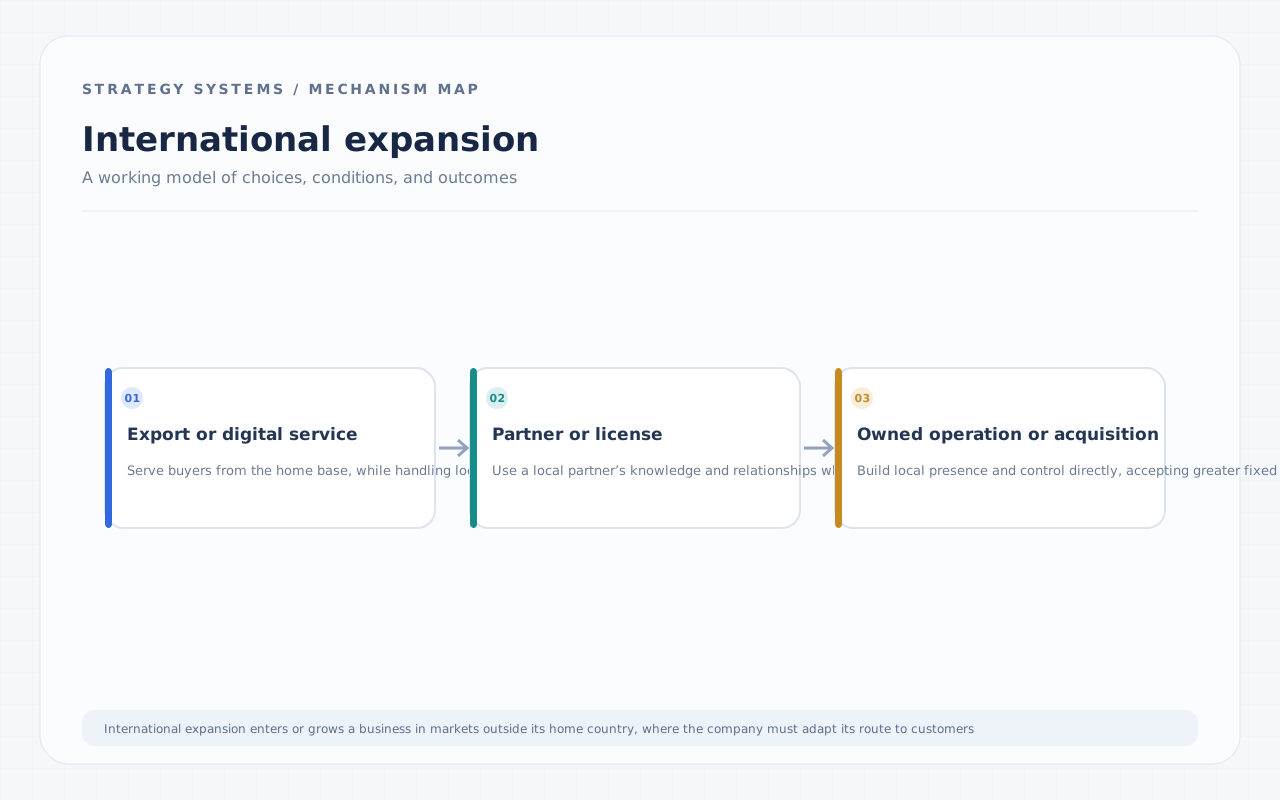
Choose the entry form that fits risk, speed, local capability, and desired control.
 Export or digital service
Serve buyers from the home base, while handling local rules, payments, and support.
01
Serve buyers from the home base, while handling local rules, payments, and support.
Serve buyers from the home base, while handling local rules, payments, and support. Partner or license
Use a local partner’s knowledge and relationships while defining brand and quality controls.
02
Use a local partner’s knowledge and relationships while defining brand and quality controls.
 Owned operation or acquisition
Build local presence and control directly, accepting greater fixed investment and execution responsibility.
03
Build local presence and control directly, accepting greater fixed investment and execution responsibility.
A continuum, not a switch
International expansion increases the share of activity exposed to different market and operating conditions; the entry route determines investment and control.
“A country count is reach; local contribution and repeat demand are the test.”
Why it matters
A successful home-market formula can meet a different competitor, legal regime, cost structure, and customer expectation abroad. The company should compare gross demand with the cost to establish, serve, and retain local customers. Track contribution and cash by market, using local currency and constant-currency views where useful, and avoid pooling high-performing countries with loss-making ones.
Amazon reported $142.9 billion of 2024 net sales in its International segment, 22% of consolidated net sales. The company also lists risks involving local regulation, political conditions, staffing, and market experience, and says international operations may not become profitable on a sustained basis. The segment figure shows scale, not uniform profitability or the result of a single entry choice.
Amazon’s International segment is not all business outside the United States. It covers internationally focused stores, includes specified exports and excludes North America-focused store exports; AWS is reported separately despite global customers. This reporting boundary cannot stand in for the economics of an individual country or entry route.
Real-world examples
The same concept shows up in different ways across industries.

When it breaks
The market may be large but expensive to serve, or local competitors may have better distribution, trust, or regulatory access. Foreign exchange can also make local growth look different in reported revenue. A company that enters too many countries at once may spread leaders, inventory, and technical support too thinly to learn effectively.
A local partner can create access but also introduces dependency, governance, and reputation risk. A wholly owned operation can improve control while increasing fixed cost and regulatory exposure. Use staged commitments, explicit decision gates, and a credible exit plan. Measure local customer retention, repeat purchases, margins, and cash needs rather than store openings or registrations alone.
Separate local demand from reporting-currency changes and the funding that can be moved across borders. A segment-wide operating result can combine mature markets, new investments and different service mixes. The entry decision needs reachable customer contribution, required local resources and commitments that remain if the company exits.
Key takeaways
- 01
Which customer and use case are reachable in the market, and what local alternative already serves them?
- 02
Which entry route balances control, investment, local knowledge, and the cost of exit?
- 03
What market-level contribution, retention, and compliance evidence will determine whether to scale or stop?
Related concepts
See all → Distribution advantage
 Franchising
Sources
- Amazon.com Inc. 2024 Form 10-K · Amazon / SEC. Printed pp. 6–7, International Operations risks; p. 24, Net Sales and mix tables; pp. 65–66, Note 10 Segment Information, International boundary and operating result.