
Company
NIKE
Partner work is economically relevant
Appears in
NIKE describes wholesale reinvestment alongside digital repositioning, markdowns and returns. Partners perform work beyond recording a sale. The account does not isolate bargaining power or show that a channel’s headline revenue determines its negotiating position.
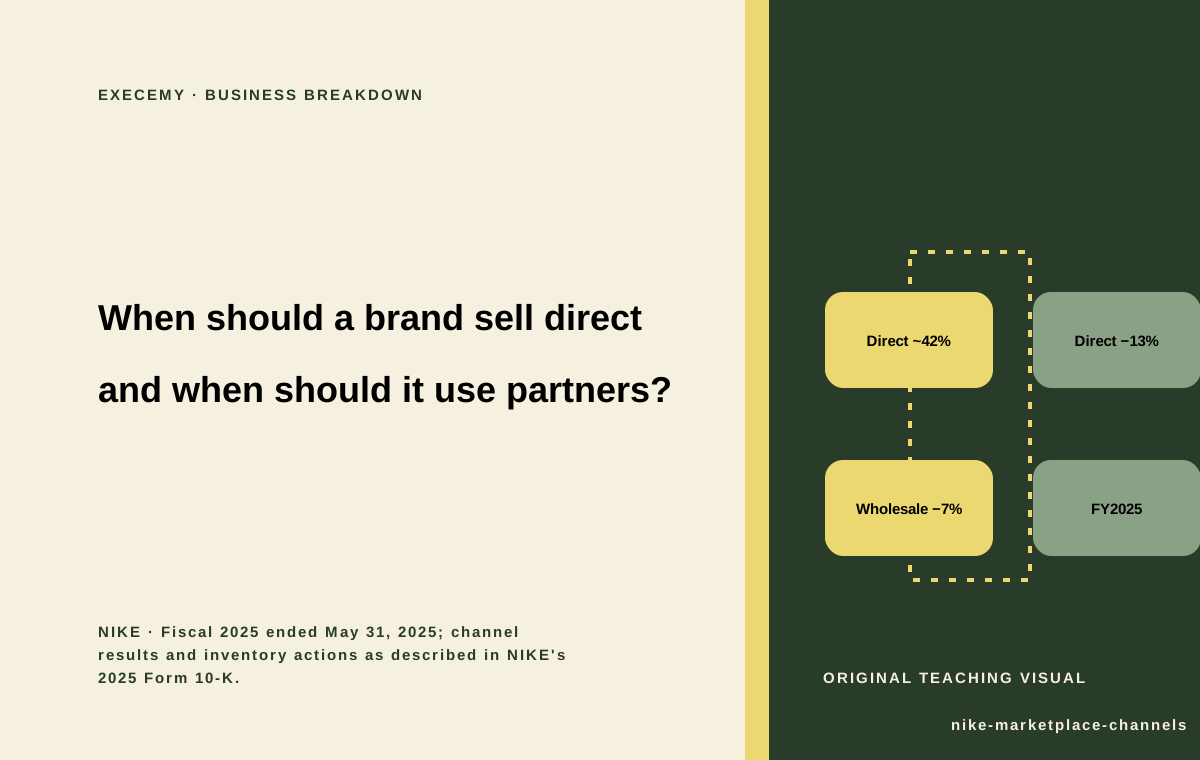
NIKE’s FY2025 filing describes full-price digital repositioning and wholesale reinvestment alongside markdowns, partner discounts and returns. Both reported routes contracted. The actual choice concerns how digital and partner activity work together during a marketplace adjustment, rather than selecting a winning checkout from revenue mix. A route performs discovery, advice, purchase, delivery and service work. A partner may make a product available or help a buyer choose before another route records the sale. Direct access may preserve a relationship while requiring traffic acquisition, inventory and returns handling. These are analytical contributions to investigate; the filing does not attribute each sale to that sequence. The decision is which work the company or partner can perform reliably, what the agreement permits and how the economics survive the full journey. Consolidated gross margin also includes more than route contribution. Inventory and demand are rival explanations for the observed contraction. Compare the complete service and contribution under each arrangement before moving work between routes.
NIKE’s FY2025 filing describes digital repositioning and wholesale reinvestment during inventory and demand pressure, alongside markdowns and returns. The actual response adjusts both direct and partner routes rather than treating the intermediary as a disposable checkout layer. A partner can perform discovery, advice, access, inventory and service work that does not disappear when the sale moves to the producer’s website. The decision is which of those activities the producer can perform reliably and at what cost. Direct selling can change customer access and margin allocation; it can also require acquiring traffic and managing fulfillment or returns. Partner selling can surrender some control while providing useful capabilities. The filing’s channel revenue and consolidated margin do not identify full channel contribution or prove which adjustment caused a result. Inventory management and changing demand are rival explanations. Trace the work and the complete customer outcome before removing the intermediary, then compare contribution under the applicable route. Ownership of checkout is not the same observation as the economics of the whole sale.
NIKE’s fiscal filing describes full-price digital repositioning and wholesale reinvestment during contraction. Product, traffic, inventory, markdowns and returns remain relevant. The disclosure does not identify a winning route from headline channel revenue.
NIKE describes digital repositioning and wholesale reinvestment alongside inventory and demand pressures. This illustrates coordinated routes rather than a universally preferable checkout. Channel revenue does not identify their full contribution.
NIKE’s filing describes changing digital and wholesale roles during a marketplace adjustment. Owning a direct route did not remove inventory, demand or service work. The disclosure does not isolate a distribution moat or identify a channel’s contribution.
Cases
Related concepts
See all → Bargaining powerNegotiating strength comes from credible alternatives.
 Channel strategyChoose the route that customers can use and the business can support.
 DisintermediationRemove a layer. Rebuild its useful work.
 Distribution advantageBeing where others can't be easily.
 Go-to-market strategyDesign the path from customer to value.
 MoatsDefensible advantages that last.