Open visual reader →
Why would a factory stop its own line?
Toyota’s retrospective history dates an automated M-type engine line at Kamigo Plant to 1966. It records automatic stops for detected problems and andon displays of their location. The subsequent operating analysis distinguishes intended mechanism from observed improvement.
Explore Toyota →
The question
Why would a factory stop its own line?
Toyota’s documented M-type engine line at Kamigo and its choice to stop equipment on detected problems. · 1966 Kamigo Plant engine-line adoption; later method explanation. Jidoka makes an abnormality visible at the process where it appears. Just-in-Time synchronizes what each step makes with the next step's need. Toyota presents them together as one production system; this is a company-described method, not a measured result for every plant. Toyota’s retrospective history dates an automated M-type engine line at Kamigo Plant to 1966. It records automatic stops for detected problems and andon displays of their location. The question is how the recorded design changes the work and which evidence would establish its benefit.
Mechanism 1 · A dated design choice, with an unmeasured outcome
A dated design choice, with an unmeasured outcome.
Toyota combined automated transport with a stop rule. Automation can move a problem downstream rapidly, so the relevant output is an accepted engine, not uninterrupted machine activity. Allowing every item to continue and inspecting later is an analytical alternative, not a documented option ranking in this record. Compare the rework and escaped defects that containment may prevent with lost operating time and restart work. The source asserts a quality benefit but supplies neither defect counts nor accepted-output rates.
Mechanism 1 · A dated design choice, with an unmeasured outcome
Toyota pairs two pillars that make problems harder to hide.
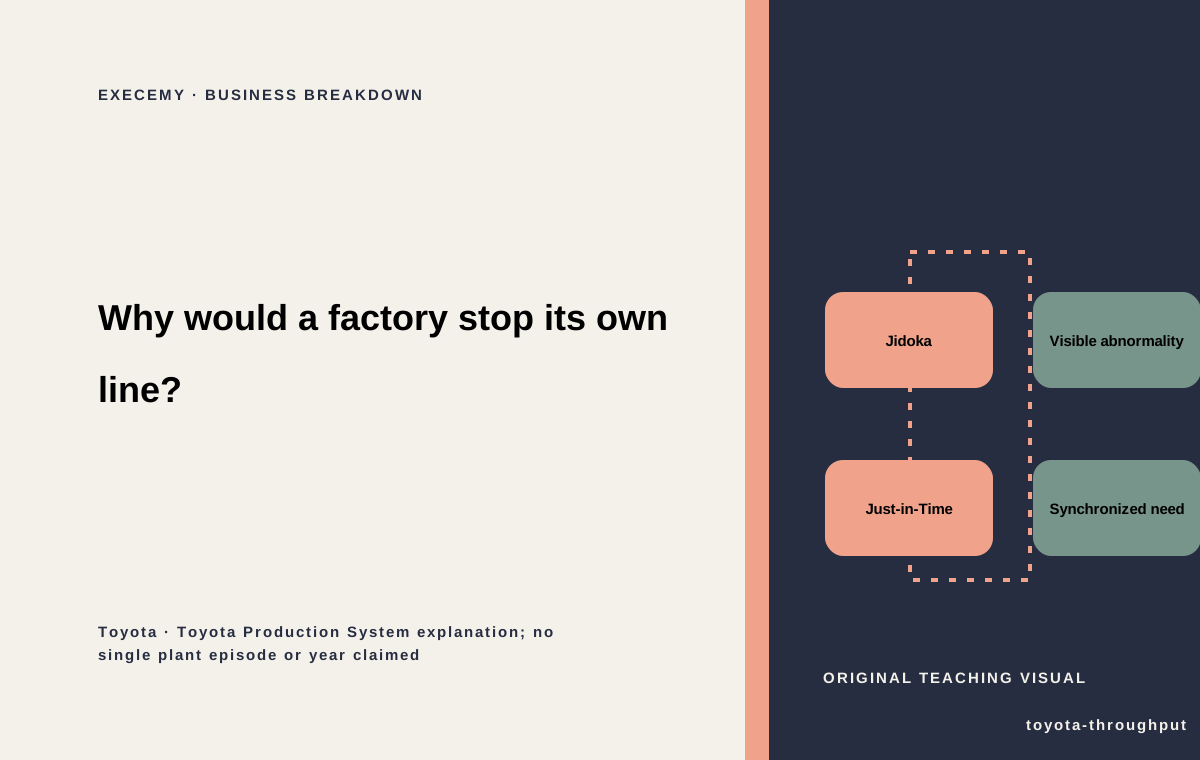
Jidoka makes an abnormality visible at the process where it appears. Just-in-Time synchronizes what each step makes with the next step's need. Toyota presents them together as one production system; this is a company-described method, not a measured result for every plant.
Mechanism 2 · Catch the abnormality before it becomes someone else's
Catch the abnormality before it becomes someone else's defect.
Toyota says a machine can stop automatically or an operator can pull the cord. The purpose is to contain the defect and make the abnormal condition clear enough to prevent recurrence.
Mechanism 2 · Catch the abnormality before it becomes someone else's
Flow links one step's need to the next step's work.
Toyota describes Just-in-Time as synchronized processes that make what is needed, when it is needed, and in the amount needed. In a teaching model, this means work and replenishment follow demand signals instead of a local step producing simply to stay busy.
Mechanism 3 · Less buffering makes problems visible
Less buffering makes problems visible—and recovery more urgent.
A buffer can hide a mismatch for a while; a smaller one may reveal it sooner. But fewer cushions also mean a disruption can affect downstream work sooner. Just-in-Time is a coordination challenge, not a claim that all inventory is waste.
Mechanism 3 · Less buffering makes problems visible
A stop only helps if the system learns and recovers.
Detecting is not fixing. The whole method requires a clear signal, authority to act, diagnosis, correction, and changed work that prevents the same abnormality from returning. Without those steps, a stop can become delay without learning.
Optional application · unscored
Choose what the stop should reveal
A packing line notices labels slipping out of alignment. One supervisor can stop the line, but the next shipment cutoff is close.
Reveal: The decision is not simply stop versus hit target. Make the defect signal visible, identify who can diagnose it, and decide how to resume without letting the same error flow downstream.
Teaching assumption: Original hypothetical production line
Teaching assumption: No defect rate, order size, or cost assigned
The answer
Why would a factory stop its own line?
Jidoka makes an abnormality visible at the process where it appears. Just-in-Time synchronizes what each step makes with the next step's need. Toyota presents them together as one production system; this is a company-described method, not a measured result for every plant. Boundary: a tightly synchronized process with too little recovery capacity may transmit a supply or equipment interruption quickly. This official description does not establish the right buffer size or show that every stop is useful. The historical record establishes a dated design intervention. Contemporary option records, stop logs, accepted output and recovery measurements would be required to evaluate its performance. The modern method page does not supply those historical observations. The dated intervention comes from a retrospective company history; modern method pages explain the mechanism but do not establish the original response protocol or causal performance. Contemporaneous option records and comparable outcome measurements remain unavailable. The case is bounded to Toyota’s documented M-type engine line at Kamigo and its choice to stop equipment on detected problems. during 1966 Kamigo Plant engine-line adoption; later method explanation.
Sources and limitations
- Toyota Production System — Toyota Motor Corporation
TPS two-pillar overview; sections 'Jidoka' and 'Just-in-Time'
Exact factual uses and inference limits are bound in the evidence claim ledger.
Official company explanation of a production philosophy. It does not establish implementation fidelity, plant-level defect rates, or productivity effects across sites.
- Toyota 75-year history: production-system development — Toyota Motor Corporation
PDF index 0, block Completion of an automated engine line (1966), Kamigo Plant, problem stop and andon location.
Exact factual uses and inference limits are bound in the evidence claim ledger.
Retrospective company history, not a contemporaneous experiment. Adoption dates and equipment/configuration are reported; no measured causal improvement or internal option-ranking record is supplied. Current method explanations are not projected backward as historical operating protocols.
Original illustrative scenes are not documentary evidence.
New concepts and cases by email