Open visual reader →
When should an expansion be unwound?
Examine the documented LEGOLAND ownership decision and distinguish its resource rationale from the wider earnings recovery.
Explore The LEGO Group →
The question
When should an expansion be unwound?
LEGOLAND control sale and LEGO Group financial reporting · Documented 2004 decision, July 2005 transaction and 2004–2005 earnings. A restructuring can release cash or decision capacity, but recurring benefits depend on what costs and capabilities leave, remain or must be rebuilt.
Mechanism 1 · LEGO chose new owners for the parks
LEGO chose new owners for the parks
In 2004, LEGO decided to find new owners for LEGOLAND Parks. Its report described the parks as capital-intensive and said disposal would release liquidity and reduce fixed expenses in support of the construction-toy core. The same passage discussed theme-park consolidation and the investment a new owner could provide. This was a choice about resources and ownership, not simply a judgment that customers did not value the parks. [Annual Report 2004, printed p. 10](https://www.lego.com/cdn/cs/aboutus/assets/blt07abb4b8a3da3f39/Annual_Report_2004_ENG.pdf).
- LEGO Group Annual Report 2004 — PDF index 11 (printed p. 10), strategy/LEGOLAND ownership; PDF index 23 (printed p. 22), Financial report, core focus and planned 2005 disposal; PDF index 40 (printed p. 39), Note 8 Discontinuing activities.
Mechanism 1 · LEGO chose new owners for the parks
The sale retained a minority interest
The completed transaction changed control but preserved a stake. LEGO’s report records a €375 million parks transaction and a new enterprise held 70% by Blackstone, 15% by LEGO Group and 15% by KIRKBI. Do not combine LEGO Group’s interest with KIRKBI’s and call the total LEGO Group ownership. The price is a reported transaction amount, not automatically net cash received by LEGO. [Annual Report 2005, printed p. 27 and Note 23](https://www.lego.com/cdn/cs/aboutus/assets/blt6eacf5a8b7af1359/Annual_Report_2005_ENG.pdf).
- LEGO Group Annual Report 2004 — PDF index 11 (printed p. 10), strategy/LEGOLAND ownership; PDF index 23 (printed p. 22), Financial report, core focus and planned 2005 disposal; PDF index 40 (printed p. 39), Note 8 Discontinuing activities.
- LEGO Group Annual Report 2005 — PDF index 2, Financial Highlights (2005 and adjusted 2004 columns); PDF index 8 (printed p. 7), Revenue and profit; PDF index 26 (printed p. 25), Financial report, total and continuing/discontinuing pre-tax results; PDF index 54 (printed p. 53), Note 23 Related parties, July sale and ownership. PDF index 40 (printed p. 39), Cash Flow Statement: Group 2005/2004 pre-tax discontinuing activities 246/(451); also PDF index 45 (printed p. 44), Note 7.
Mechanism 2 · Control and exposure can be separated
Control and exposure can be separated
Selling control can let a specialist owner fund and operate an activity while the former owner redeploys cash and attention. Retaining a minority interest preserves exposure to future value but gives a different control position. This is the mechanism to test in the chosen structure. The transaction record does not establish how much each benefit was worth or whether a full exit would have been better.
- LEGO Group Annual Report 2004 — PDF index 11 (printed p. 10), strategy/LEGOLAND ownership; PDF index 23 (printed p. 22), Financial report, core focus and planned 2005 disposal; PDF index 40 (printed p. 39), Note 8 Discontinuing activities.
- LEGO Group Annual Report 2005 — PDF index 2, Financial Highlights (2005 and adjusted 2004 columns); PDF index 8 (printed p. 7), Revenue and profit; PDF index 26 (printed p. 25), Financial report, total and continuing/discontinuing pre-tax results; PDF index 54 (printed p. 53), Note 23 Related parties, July sale and ownership. PDF index 40 (printed p. 39), Cash Flow Statement: Group 2005/2004 pre-tax discontinuing activities 246/(451); also PDF index 45 (printed p. 44), Note 7.
Mechanism 2 · Control and exposure can be separated
A total turnaround is not one causal effect
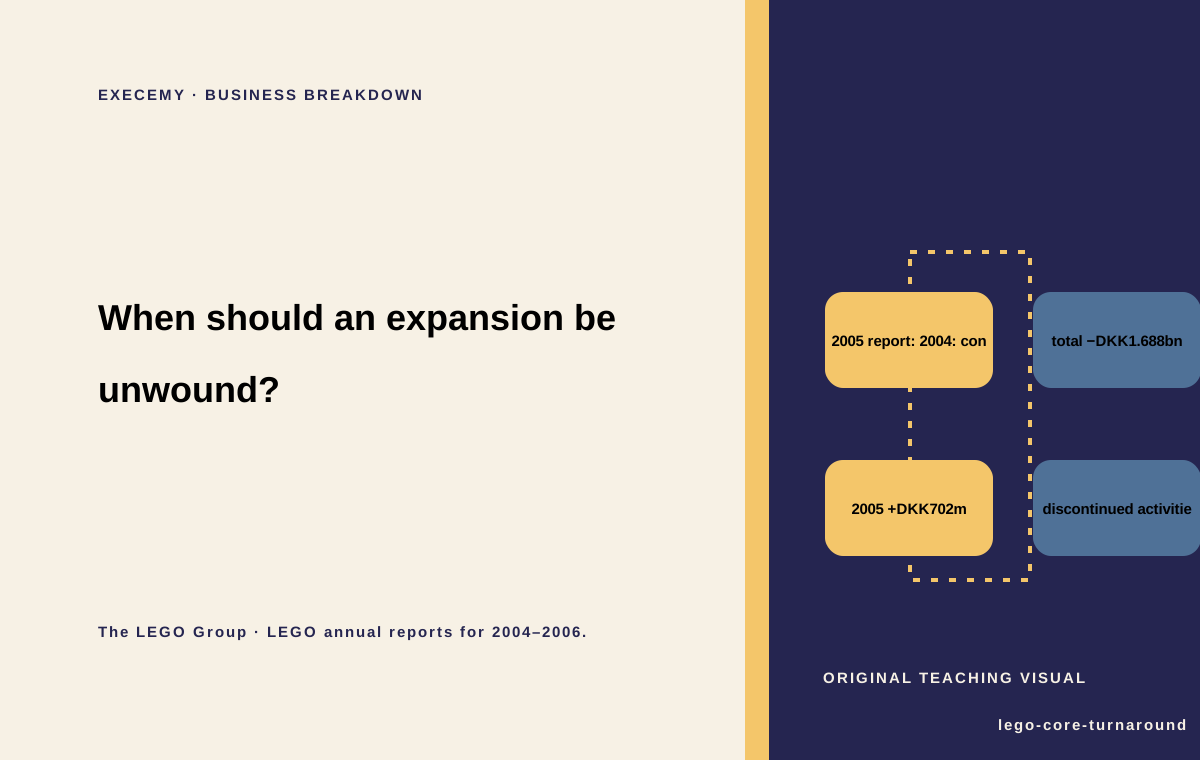
The DKK 2,390m total pre-tax improvement includes DKK 1,693m from continuing results and DKK 697m from discontinuing results. The continuing improvement itself contains special-item changes.
- LEGO Group Annual Report 2004 — PDF index 11 (printed p. 10), strategy/LEGOLAND ownership; PDF index 23 (printed p. 22), Financial report, core focus and planned 2005 disposal; PDF index 40 (printed p. 39), Note 8 Discontinuing activities.
- LEGO Group Annual Report 2005 — PDF index 2, Financial Highlights (2005 and adjusted 2004 columns); PDF index 8 (printed p. 7), Revenue and profit; PDF index 26 (printed p. 25), Financial report, total and continuing/discontinuing pre-tax results; PDF index 54 (printed p. 53), Note 23 Related parties, July sale and ownership. PDF index 40 (printed p. 39), Cash Flow Statement: Group 2005/2004 pre-tax discontinuing activities 246/(451); also PDF index 45 (printed p. 44), Note 7.
Mechanism 3 · Revenue and charges also changed
Revenue and charges also changed
The strongest competing explanation for earnings recovery is improvement within continuing operations together with the reduction or reversal of earlier charges. Management explicitly points to both revenue and savings for the pre-special-item improvement. The much larger total pre-tax swing includes impairment, restructuring, finance and discontinuing results. Using that entire swing as the profit created by divesting parks would turn a chronology into a causal claim.
- LEGO Group Annual Report 2004 — PDF index 11 (printed p. 10), strategy/LEGOLAND ownership; PDF index 23 (printed p. 22), Financial report, core focus and planned 2005 disposal; PDF index 40 (printed p. 39), Note 8 Discontinuing activities.
- LEGO Group Annual Report 2005 — PDF index 2, Financial Highlights (2005 and adjusted 2004 columns); PDF index 8 (printed p. 7), Revenue and profit; PDF index 26 (printed p. 25), Financial report, total and continuing/discontinuing pre-tax results; PDF index 54 (printed p. 53), Note 23 Related parties, July sale and ownership. PDF index 40 (printed p. 39), Cash Flow Statement: Group 2005/2004 pre-tax discontinuing activities 246/(451); also PDF index 45 (printed p. 44), Note 7.
Optional application · unscored
Fund the product or the attraction?
A fictional manufacturer owns visitor attractions while its main product requires production investment.
Reveal: Compare capital need, retained rights, one-time cash and continuing obligations under keeping control, full sale and a minority-stake sale.
Teaching assumption: Fictional manufacturer; no LEGO internal alternatives or counterfactual returns asserted.
The answer
Selling control can release resources while preserving exposure.
A restructuring can release cash or decision capacity, but recurring benefits depend on what costs and capabilities leave, remain or must be rebuilt. LEGO’s recovery combined higher revenue, savings, different impairment charges, restructuring expense changes and discontinued-activity results; portfolio narrowing alone is not identified. LEGO retained a minority stake in the parks buyer, rather than severing all economic ties. Its reported earnings recovery exceeded the improvement before special items. The case is bounded to LEGOLAND control sale and LEGO Group financial reporting during Documented 2004 decision, July 2005 transaction and 2004–2005 earnings.
Sources and limitations
- LEGO Group Annual Report 2004 — LEGO Group
PDF index 11 (printed p. 10), strategy/LEGOLAND ownership; PDF index 23 (printed p. 22), Financial report, core focus and planned 2005 disposal; PDF index 40 (printed p. 39), Note 8 Discontinuing activities.
Precise uses are bound in the claim ledger.
Contemporaneous plans are separated from later completed transactions. 2005 report reclassifies retailer contributions; numerical comparisons here use its own comparative columns.
- LEGO Group Annual Report 2005 — LEGO Group
PDF index 2, Financial Highlights (2005 and adjusted 2004 columns); PDF index 8 (printed p. 7), Revenue and profit; PDF index 26 (printed p. 25), Financial report, total and continuing/discontinuing pre-tax results; PDF index 54 (printed p. 53), Note 23 Related parties, July sale and ownership. PDF index 40 (printed p. 39), Cash Flow Statement: Group 2005/2004 pre-tax discontinuing activities 246/(451); also PDF index 45 (printed p. 44), Note 7.
Precise uses are bound in the claim ledger.
Adjusted 2004 comparisons from one presentation. Pre-special-item profit is not total pre-tax profit; restructuring and impairment are separate. Management’s sales/savings explanation does not isolate causal effects.
Original illustrative scenes are not documentary evidence.
New concepts and cases by email