Open visual reader →
What was the business buying with its losses?
Amazon told shareholders why it would favor long-term market leadership over short-term profit appearance. The letter also promised to measure, stop, and learn—an investment discipline that deserves as much attention as the ambition.
Explore Amazon →
The question
What was the business buying with its losses?
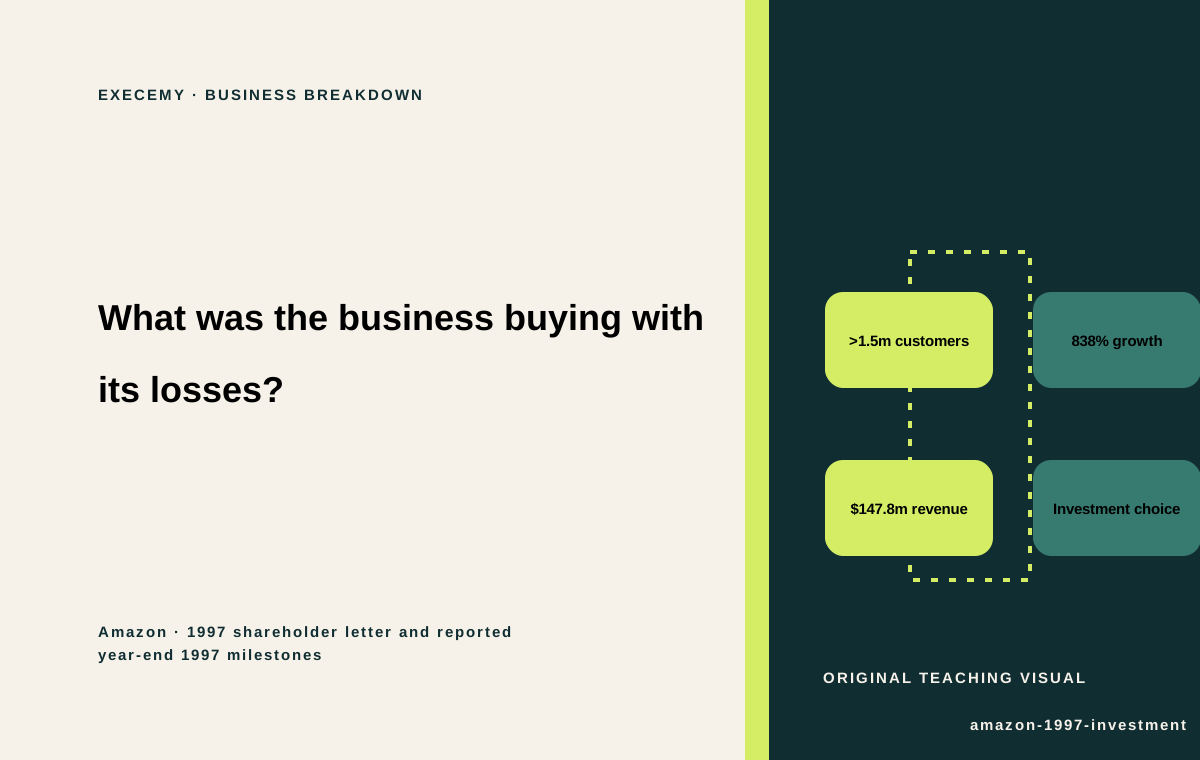
Amazon.com's original 1997 shareholder letter, bounded to its investment principles and described customer/revenue scale · 1997 shareholder letter and reported year-end 1997 milestones. The shareholder letter says Amazon served more than 1.5 million customers and grew revenue 838% to $147.8 million that year. It then explains what leadership believed those numbers did—and did not—justify. Amazon told shareholders why it would favor long-term market leadership over short-term profit appearance. The letter also promised to measure, stop, and learn—an investment discipline that deserves as much attention as the ambition. Amazon.com's original 1997 shareholder letter, bounded to its investment principles and described customer/revenue scale 1997 shareholder letter and reported year-end 1997 milestones
- Amazon's original 1997 letter to shareholders — 1997 letter, “Infrastructure” section: opening sentence on supporting increased traffic, sales and service levels; bullet on distribution-center capacity from 50,000 to 285,000 square feet; bullet on year-end inventory exceeding 200,000 titles. Do not cite the opening milestones or long-term investment bullets for these capacity and title observations.
Mechanism 1 · In 1997, Amazon reported growth
In 1997, Amazon reported growth—and chose to keep investing.
The shareholder letter says Amazon served more than 1.5 million customers and grew revenue 838% to $147.8 million that year. It then explains what leadership believed those numbers did—and did not—justify.
- Amazon's original 1997 letter to shareholders — 1997 letter, “Infrastructure” section: opening sentence on supporting increased traffic, sales and service levels; bullet on distribution-center capacity from 50,000 to 285,000 square feet; bullet on year-end inventory exceeding 200,000 titles. Do not cite the opening milestones or long-term investment bullets for these capacity and title observations.
Mechanism 1 · In 1997, Amazon reported growth
The spending had a physical shape: capacity and available titles.
Amazon said it expanded distribution-center capacity from 50,000 to 285,000 square feet to support higher traffic, sales, and service levels, while year-end inventory exceeded 200,000 titles. These are capacity and availability inputs, not proof of returns or a claim that every loss funded them.
- Amazon's original 1997 letter to shareholders — 1997 letter, “Infrastructure” section: opening sentence on supporting increased traffic, sales and service levels; bullet on distribution-center capacity from 50,000 to 285,000 square feet; bullet on year-end inventory exceeding 200,000 titles. Do not cite the opening milestones or long-term investment bullets for these capacity and title observations.
Mechanism 2 · The letter chose leadership potential over near-term o
The letter chose leadership potential over near-term optics.
Amazon wrote that investment decisions would favor long-term market-leadership considerations over short-term profitability or Wall Street reactions. That creates room for upfront cost, but only if the investments are aimed at a durable advantage rather than activity for its own sake.
- Amazon's original 1997 letter to shareholders — 1997 letter, “Infrastructure” section: opening sentence on supporting increased traffic, sales and service levels; bullet on distribution-center capacity from 50,000 to 285,000 square feet; bullet on year-end inventory exceeding 200,000 titles. Do not cite the opening milestones or long-term investment bullets for these capacity and title observations.
Mechanism 2 · The letter chose leadership potential over near-term o
The letter paired bold bets with a way to stop them.
Amazon promised to measure programs analytically, discontinue those without acceptable returns, and increase investment in programs that worked. The letter makes discipline part of the strategy, but does not show a detailed project-level scorecard.
- Amazon's original 1997 letter to shareholders — 1997 letter, “Infrastructure” section: opening sentence on supporting increased traffic, sales and service levels; bullet on distribution-center capacity from 50,000 to 285,000 square feet; bullet on year-end inventory exceeding 200,000 titles. Do not cite the opening milestones or long-term investment bullets for these capacity and title observations.
Mechanism 3 · Future cash flow was the stated north star
Future cash flow was the stated north star—not a substitute for accounting.
The letter said Amazon would prefer the present value of future cash flows to the appearance of GAAP accounting when forced to choose. It also noted the company was incurring net losses. Cash, revenue, and profit remain distinct measures; the letter did not value those future flows for us.
- Amazon's original 1997 letter to shareholders — 1997 letter, “Infrastructure” section: opening sentence on supporting increased traffic, sales and service levels; bullet on distribution-center capacity from 50,000 to 285,000 square feet; bullet on year-end inventory exceeding 200,000 titles. Do not cite the opening milestones or long-term investment bullets for these capacity and title observations.
Mechanism 3 · Future cash flow was the stated north star
Some investments would fail, and the letter said so up front.
Amazon acknowledged that some bold investments would pay off and some would not. That candor does not make a bad investment harmless; the hurdle is whether expected learning and upside justify the commitment and whether the company can absorb the downside.
- Amazon's original 1997 letter to shareholders — 1997 letter, “Infrastructure” section: opening sentence on supporting increased traffic, sales and service levels; bullet on distribution-center capacity from 50,000 to 285,000 square feet; bullet on year-end inventory exceeding 200,000 titles. Do not cite the opening milestones or long-term investment bullets for these capacity and title observations.
Mechanism 4 · A shareholder letter explains the bet; it cannot prove
A shareholder letter explains the bet; it cannot prove the counterfactual.
The letter tells us what management said it intended and some 1997 results. It cannot show what Amazon would have become with less investment or a different allocation. Later success can make the chosen risks look inevitable; they were not.
- Amazon's original 1997 letter to shareholders — 1997 letter, “Infrastructure” section: opening sentence on supporting increased traffic, sales and service levels; bullet on distribution-center capacity from 50,000 to 285,000 square feet; bullet on year-end inventory exceeding 200,000 titles. Do not cite the opening milestones or long-term investment bullets for these capacity and title observations.
Optional application · unscored
Give a long bet a learning boundary
A young marketplace proposes an adjacent service that may reach another customer group but requires continuing fixed operating commitments.
Reveal: Name the customer value and the best feasible alternative use of resources. Stage commitments where the contracts allow it, and specify evidence that would change expansion or exit. Show the funding the company needs while uncertainty remains.
Teaching assumption: Original fictional operating situation.
Teaching assumption: No numerical costs, durations, volumes, probabilities or observed company outcome are assigned.
The answer
What was the business buying with its losses?
The shareholder letter says Amazon served more than 1.5 million customers and grew revenue 838% to $147.8 million that year. It then explains what leadership believed those numbers did—and did not—justify. Boundary: this is a contemporaneous statement of Amazon's own philosophy, not proof that long-term investment beats profitability targets generally. Amazon expressly said it was not claiming its philosophy was the right one, and the letter does not disclose a full portfolio return analysis. The letter documents intentions and reported 1997 context. It does not reveal project-level returns or the result of rejected alternatives. Later corporate success cannot validate each earlier commitment; capacity and title counts do not establish utilization or return. The case is bounded to Amazon.com's original 1997 shareholder letter, bounded to its investment principles and described customer/revenue scale during 1997 shareholder letter and reported year-end 1997 milestones.
Sources and limitations
- Amazon's original 1997 letter to shareholders — Amazon.com, Inc. / About Amazon; reprinted from 1997 Annual Report
1997 letter, “Infrastructure” section: opening sentence on supporting increased traffic, sales and service levels; bullet on distribution-center capacity from 50,000 to 285,000 square feet; bullet on year-end inventory exceeding 200,000 titles. Do not cite the opening milestones or long-term investment bullets for these capacity and title observations.
Claims and observations identify the precise uses.
Management's account states intent and a reported milestone; it does not establish which investments caused later outcomes or validate the strategy against alternatives.
Original illustrative scenes are not documentary evidence.
New concepts and cases by email